



Many people devote significant attention to caring for their face, yet the neck and décolletage are often overlooked. Ironically, these areas frequently show visible signs of aging just as early, if not earlier, than the face itself.
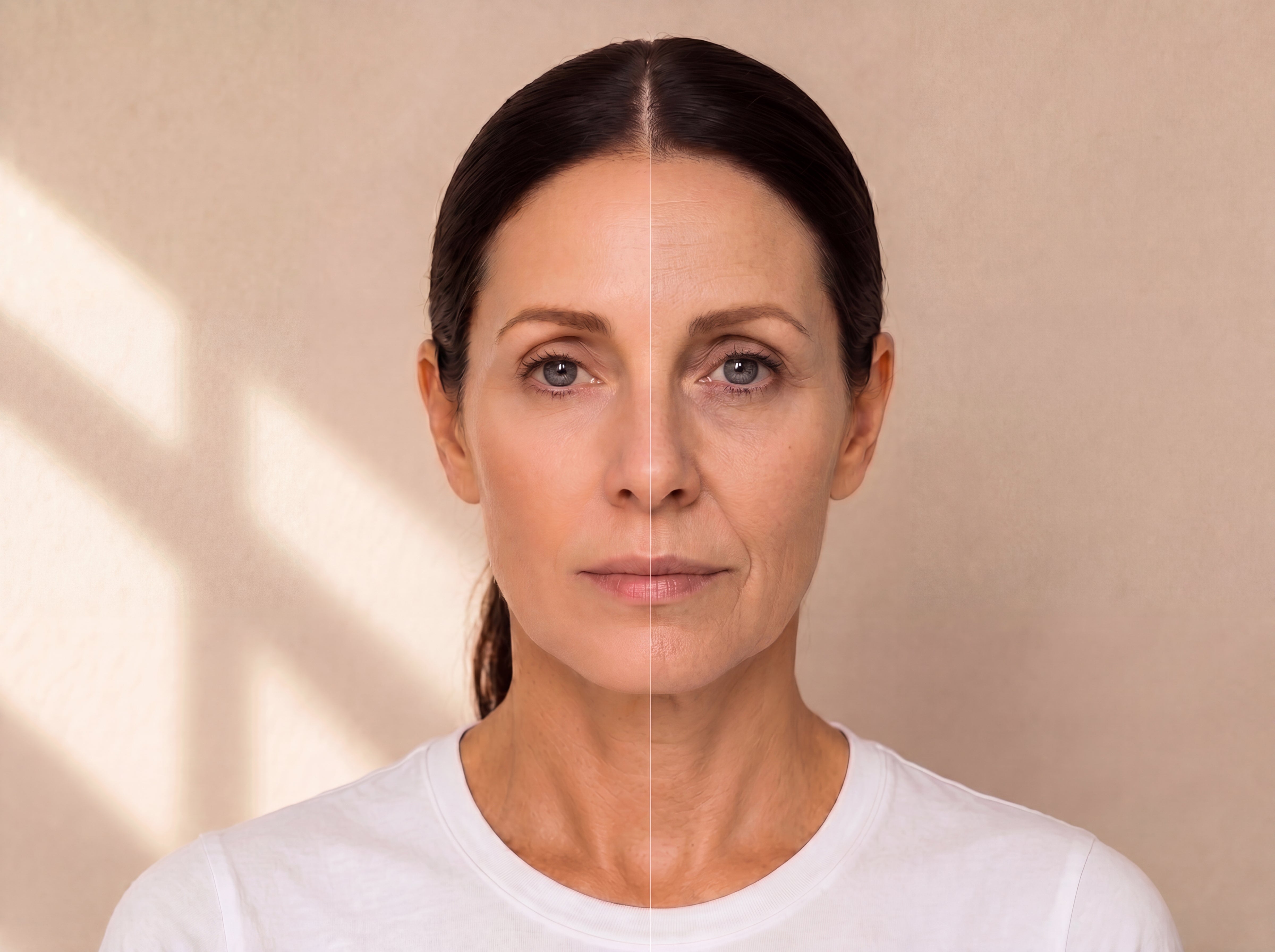
Fine lines across the chest, crepey skin on the neck, loss of firmness beneath the jawline, and uneven pigmentation are all common concerns that become more noticeable with age. While sun exposure and lifestyle certainly play a role, there are also biological reasons why these areas age differently.
How the Neck and Décolletage Differ From Facial Skin
Although the skin of the face, neck, and chest may appear similar, important anatomical differences influence how each area ages over time.
Thinner Skin and Less Structural Support
The neck and décolletage contain a thinner dermis than many areas of the face. The dermis is the layer responsible for much of the skin's strength and resilience because it contains collagen, elastin, and other structural proteins.
When collagen levels naturally decline with age, thinner skin has less reserve capacity to maintain firmness. As a result, laxity, fine lines, and crepey texture often become visible more quickly below the jawline than they do elsewhere (Thornton, 2013).
These changes are often particularly noticeable on the sides of the neck and across the upper chest, where the skin is naturally delicate and repeatedly exposed to environmental stressors.
Fewer Oil Glands and Reduced Moisture Retention
The neck and chest also contain fewer sebaceous glands than many facial regions. Sebaceous glands produce sebum, a natural oil that helps maintain hydration and support the skin barrier.
With lower oil production, these areas are more prone to dryness and dehydration. Over time, this can contribute to a rougher texture, increased sensitivity, and the appearance of fine, crepey lines (Hall & Phillips, 2005).
While moisturizers can help improve comfort and hydration, supporting the skin's underlying structure becomes increasingly important as aging progresses.
The Role of Sun Exposure
One of the biggest contributors to neck and décolletage aging is cumulative ultraviolet (UV) exposure.
Unlike occasional sunburns, photoaging develops gradually over many years. Daily exposure to UV radiation breaks down collagen fibers, damages elastin, and increases the production of enzymes known as matrix metalloproteinases (MMPs), which accelerate collagen degradation (Fisher et al., 2002; Flament et al., 2013).
The décolletage is particularly vulnerable because it often receives substantial sun exposure while receiving less sunscreen coverage than the face. Clothing styles, outdoor activities, and even incidental exposure while driving can contribute to cumulative damage over time.
This helps explain why pigmentation changes, uneven tone, wrinkles, and loss of elasticity are frequently more pronounced across the chest than expected.
Why Movement Matters
The neck experiences constant movement throughout the day. Every glance downward, every turn of the head, and every sleeping position creates repeated folding and stretching of the skin. Over time, these repetitive mechanical forces contribute to the formation of visible lines and wrinkles.
Modern lifestyles have introduced an additional factor commonly referred to as "tech neck." Hours spent looking down at phones, tablets, and laptops place the neck in a flexed position for prolonged periods. This repetitive movement can reinforce horizontal neck lines and place additional stress on already delicate skin.
Unlike expression lines on the face, which are largely driven by facial muscles, many neck wrinkles develop from a combination of movement, collagen loss, and structural weakening within the skin itself.
Hormonal Changes and Collagen Loss
Hormones play an important role in maintaining healthy skin throughout life. Estrogen, in particular, supports collagen production, hydration, skin thickness, and wound healing. As estrogen levels decline with age, especially during perimenopause and menopause, the skin undergoes several measurable changes (Thornton, 2013; Hall & Phillips, 2005).
Research has shown that collagen content decreases significantly during the years surrounding menopause. Because the neck and décolletage already have thinner skin and less structural support, these hormonal changes often become visible earlier in these areas (Brincat et al., 1985).
Women frequently notice:
- Reduced firmness beneath the jawline
- Increased crepiness on the neck
- Fine lines across the chest
- Slower recovery from environmental stressors
- Greater skin dryness and sensitivity
These changes are a normal part of aging, but understanding the biology behind them helps identify strategies that may support healthier, more resilient skin.
Supporting the Neck and Décolletage
The goal is not to eliminate aging. Rather, it is to support the biological systems that help maintain skin structure, hydration, and resilience.
Consistent Sun Protection
Sun protection remains one of the most effective strategies for preserving skin quality over time. Applying broad-spectrum SPF to the neck and chest every day helps reduce cumulative UV damage and supports long-term collagen preservation. Importantly, sunscreen should be applied to these areas as consistently as it is applied to the face.
Support the Skin Barrier
A healthy skin barrier helps maintain hydration and reduce unnecessary inflammation.
Gentle cleansing, regular moisturization, and avoiding excessive exfoliation can help support barrier integrity. Ingredients that reinforce hydration may be particularly beneficial in areas prone to dryness and environmental exposure.
Support Collagen and Structural Proteins
As collagen production naturally slows, ingredients that communicate with the skin's repair systems become increasingly valuable.
Peptides are among the most researched examples of these signaling molecules.
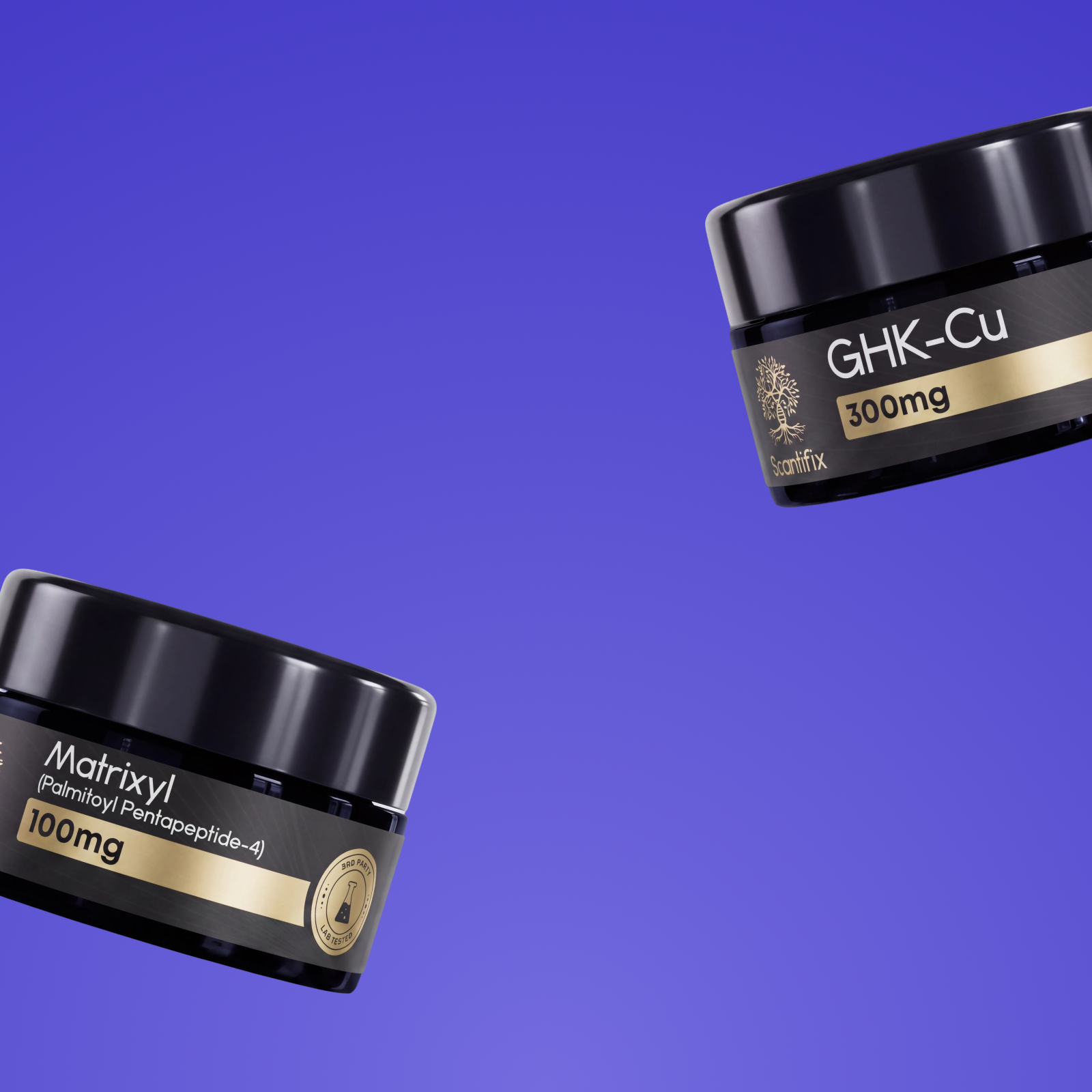
GHK-Cu is a naturally occurring copper peptide that supports tissue repair, collagen synthesis, and healthy inflammatory regulation. Research has shown it can help improve skin quality while supporting the skin's natural renewal processes (Pickart & Margolina, 2018).
Matrixyl works by signaling fibroblasts to increase the production of collagen and other structural proteins associated with firmness and elasticity (Schagen, 2017).
Syn-Coll supports collagen synthesis through pathways involved in tissue remodeling and structural maintenance (Ferreira et al., 2020).
For the neck and décolletage specifically, Syn-Tacks is particularly interesting because it targets the dermo-epidermal junction, the structural interface that connects the epidermis and dermis. This area naturally weakens with age, contributing to sagging and reduced skin cohesion. By supporting proteins involved in this junction, Syn-Tacks may help reinforce the skin's structural foundation.
Together, these peptides help support many of the biological systems involved in maintaining healthier-looking skin below the jawline.
Technologies That May Help Support Aging Skin
Topical skincare is often most effective when combined with approaches that support the skin's natural repair processes.
Microneedling
Microneedling creates controlled micro-injuries that stimulate the skin's repair response. This process encourages collagen production and can help improve skin texture and firmness over time (Singh & Yadav, 2016).
It also enhances the penetration of topical ingredients, allowing collagen-supporting peptides to reach deeper layers of the skin.
Red Light Therapy
Red light therapy works by exposing the skin to specific wavelengths of red and near-infrared light that support cellular energy production.
Research suggests this may help stimulate collagen synthesis, support healthy inflammatory balance, and improve overall skin quality (Kim et al., 2019). Because it is non-invasive and well tolerated, it has become a popular option for supporting skin aging concerns in delicate areas such as the neck and chest.
Taking a More Complete Approach
One reason the neck and décolletage often appear older than the face is simply that they receive less attention.
Many skincare routines stop at the jawline, despite the fact that these areas experience substantial sun exposure, repetitive movement, hormonal influences, and structural aging.
Extending the same level of care to the neck and chest can make a meaningful difference over time. Supporting collagen production, maintaining barrier health, protecting against UV damage, and encouraging healthy repair processes helps address many of the biological factors that contribute to visible aging.
For those seeking a more comprehensive approach, our Wrinkler Twinkler Bundle combines high-purity peptides with advanced skin-supportive technologies designed to work alongside the skin's natural repair systems. By addressing multiple aspects of skin aging simultaneously, it offers support for the neck, décolletage, and face as part of a unified skincare strategy.
The Takeaway
The neck and décolletage are often treated as an extension of the face, but biologically they age differently. Thinner skin, lower oil production, constant movement, and cumulative sun exposure create a unique set of challenges that can make visible aging appear earlier in these areas.
The good news is that skin below the jawline remains responsive to support. Consistent sun protection, barrier-focused skincare, collagen-supporting peptides, and technologies like microneedling and red light therapy can all help maintain healthier, more resilient skin over time.
At Scantifix, we believe these often-overlooked areas deserve the same attention as the face. By supporting the skin's natural repair and renewal processes, it's possible to care for the neck and décolletage in a way that is both science-backed and sustainable.
References
Brincat, M., Moniz, C. F., Studd, J. W. W., Darby, A. J., Magos, A., Emburey, G., & Versi, E. (1985). Long-term effects of the menopause and sex hormones on skin thickness. British Journal of Obstetrics and Gynaecology, 92(3), 256–259. https://pubmed.ncbi.nlm.nih.gov/3978054/
Ferreira, M. S., Magalhães, M. C., Sousa-Lobo, J. M., & Almeida, I. F. (2020). Trending anti-aging peptides. Cosmetics, 7(4), 91. https://doi.org/10.3390/cosmetics7040091
Fisher, G. J., Kang, S., Varani, J., Bata-Csorgo, Z., Wan, Y., Datta, S., & Voorhees, J. J. (2002). Mechanisms of photoaging and chronological skin aging. Archives of Dermatology, 138(11), 1462–1470. https://pubmed.ncbi.nlm.nih.gov/12437452/
Flament et al. (2013). Photoaging. Journal of Investigative Dermatology, 133(E1), E2–E6. https://www.ncbi.nlm.nih.gov/pmc/articles/PMC3790843/
Hall, G., & Phillips, T. J. (2005). Estrogen and skin: The effects of estrogen, menopause, and hormone replacement therapy on the skin. Journal of the American Academy of Dermatology, 53(4), 555–568. https://doi.org/10.1016/j.jaad.2004.08.039
Kim, B., Mukherjee, A., Seo, S., Ali, F., Southall, M., & Parsa, R. (2019). Low-level red and infrared light increases expression of collagen, elastin, and hyaluronic acid in skin. Journal of the American Academy of Dermatology, 81(4), AB434. https://doi.org/10.1016/j.jaad.2019.10.089
Pickart, L., & Margolina, A. (2018). Regenerative and protective actions of the GHK-Cu peptide in the light of the new gene data. International Journal of Molecular Sciences, 19(7), 1987. https://doi.org/10.3390/ijms19071987
Schagen, S. K. (2017). Topical peptide treatments with effective anti-aging results. Cosmetics, 4(2), 16. https://doi.org/10.3390/cosmetics4020016
Singh, A., & Yadav, S. (2016). Microneedling: Advances and widening horizons. Indian Dermatology Online Journal, 7(4), 244–254. https://doi.org/10.4103/2229-5178.185468
Thornton, M. J. (2013). Estrogens and aging skin. Dermato-Endocrinology, 5(2), 264–270. https://doi.org/10.4161/derm.23872

Leave a comment
All comments are moderated before being published.
This site is protected by hCaptcha and the hCaptcha Privacy Policy and Terms of Service apply.