


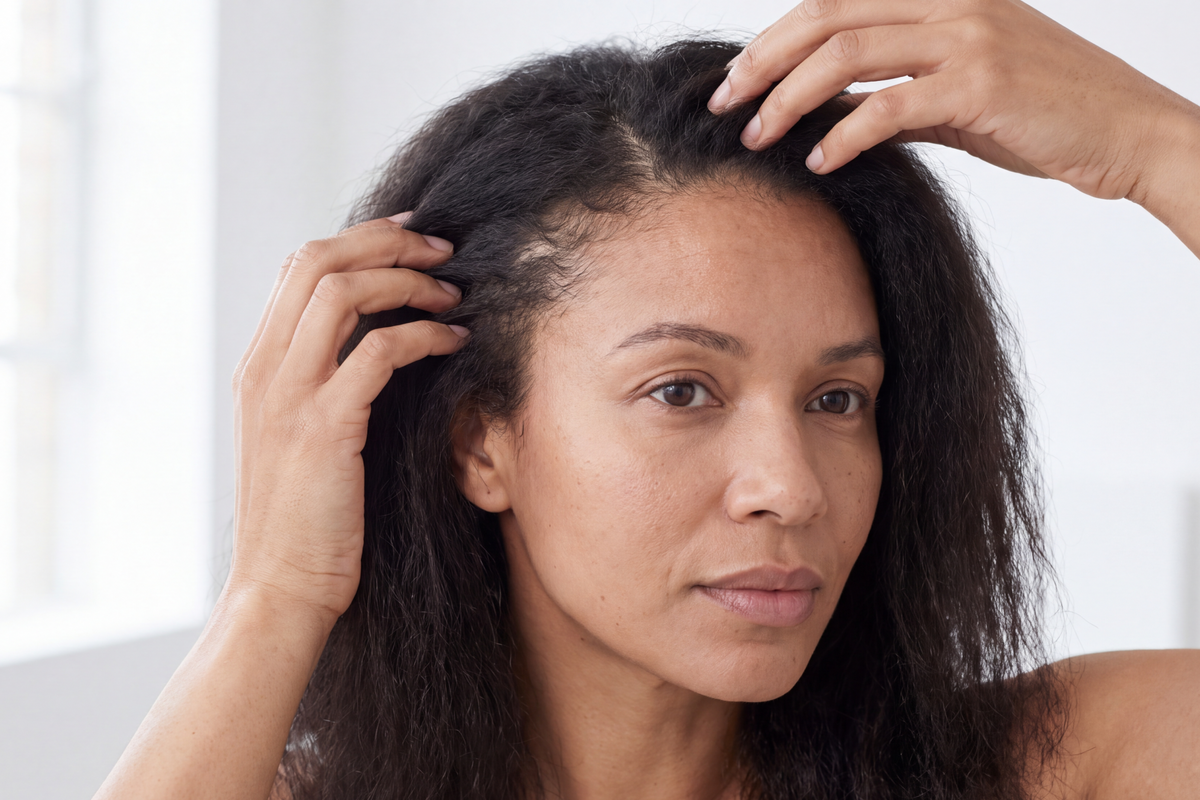
If you've ever started a new hair growth routine, you've probably asked yourself the same question after a few weeks: "Is it actually working?"
But unlike skin, which constantly renews its surface, hair grows according to a carefully regulated cycle that unfolds over months or even years. Before a new hair becomes visible, important biological changes must first occur beneath the scalp, inside the follicle itself.
Understanding this process doesn't just help set realistic expectations. It also explains why consistency is one of the most important factors in any long-term hair care routine.
Hair Doesn't Grow All at Once
One of the biggest misconceptions about hair growth is that all of your hair is growing at the same time.
In reality, every hair follicle operates independently. At any given moment, some follicles are actively producing hair, while others are resting or preparing to shed their existing strand (Stenn & Paus, 2001; Schneider et al., 2009).
Researchers divide this process into four stages:
- Anagen: the active growth phase
- Catagen: a brief transition phase
- Telogen: the resting phase
- Exogen: the shedding phase, when the old hair is released (Paus & Cotsarelis, 1999; Stenn & Paus, 2001)
Each follicle moves through these stages on its own schedule. This staggered cycle helps maintain relatively stable hair density, since not all hairs are shed at the same time (Stenn & Paus, 2001).
The anagen phase is especially important because it determines how long a hair continues growing before eventually entering its resting stage. On the scalp, this growth phase can last anywhere from two to seven years, although genetics, age, hormones, nutrition, and overall follicle health all influence its duration (Alonso & Fuchs, 2006; Schneider et al., 2009).
Most Changes Begin Beneath the Surface
When people begin using a topical hair treatment, they often expect to see new hairs within a few weeks. Hair biology rarely works that quickly.
Hair follicles are living structures located several millimeters beneath the surface of the scalp. Before any visible change can occur, ingredients must first interact with the scalp environment and support the biological processes taking place within the follicle itself (Paus & Cotsarelis, 1999; Schneider et al., 2009).
Even after a follicle begins producing a new hair shaft, that hair still needs time to emerge from the scalp. Human scalp hair grows at an average rate of approximately 1 centimeter per month, although growth rates vary between individuals and even between follicles (Paus & Cotsarelis, 1999; Stenn & Paus, 2001).
As a result, many of the earliest biological changes remain completely invisible. The follicle may already be responding beneath the surface, even though there is nothing obvious to see in the mirror.
Why Consistency Matters
Hair growth is less like applying makeup and more like growing a garden. You cannot water a plant once and expect it to flourish.
Instead, healthy growth depends on providing the right environment day after day.
The same principle applies to the scalp.
Many topical ingredients are designed to support biological processes associated with healthier follicles rather than forcing immediate cosmetic changes. Depending on the ingredient, research has explored effects on areas such as:
- maintaining a healthy scalp environment
- supporting extracellular matrix remodeling around the follicle
- encouraging normal cellular signaling
- supporting healthy circulation around hair follicles
- reducing biological stress within scalp tissues (Schneider et al., 2009; Pickart & Margolina, 2018)
These processes develop gradually. Consistent application provides repeated opportunities for the scalp and follicles to receive those signals over time.
Skipping an occasional application is unlikely to erase progress. However, repeatedly stopping and restarting a routine makes it more difficult to provide the continuous support that these slow biological processes require.
The Hair Growth Timeline
Although every individual is different, the timeline for visible improvement is generally much longer than many people expect.
Weeks 1 to 4
Most activity is happening beneath the scalp. Changes may be occurring within the follicle itself, but visible differences are usually minimal.
Months 2 to 3
Some people begin noticing reduced shedding or improvements in the overall condition of their scalp. Visible density changes are often still limited.
Months 3 to 6
New hairs may begin emerging from follicles that have entered active growth. Existing hairs may also appear healthier as stronger strands gradually replace older ones.
Beyond 6 months
Continued consistency allows more follicles to complete larger portions of their growth cycle, making improvements in thickness and density easier to appreciate.
These timelines are consistent with many clinical studies evaluating cosmetic hair products, which commonly measure outcomes after 12 to 24 weeks rather than after only a few weeks.
Why People Often Quit Too Soon
Hair growth treatments are often judged by what can be seen in the mirror.
The challenge is that visible hair is one of the last parts of the process to change.
Long before a new strand emerges from the scalp, the follicle has already progressed through weeks or months of its natural growth cycle. Any biological support provided by a topical routine must first influence the follicle itself before that change can become visible (Paus & Cotsarelis, 1999; Stenn & Paus, 2001).
This mismatch between expectations and biology is one reason people abandon hair routines prematurely. When visible improvements don't appear after a few weeks, it's easy to assume that nothing is happening.
In reality, the absence of immediate results doesn't necessarily mean the follicle isn't responding. It may simply mean that the new hair hasn't had enough time to grow beyond the surface of the scalp (Schneider et al., 2009).
Understanding this timeline can make it easier to stay consistent and evaluate a routine over a realistic period rather than expecting changes that biology isn't designed to deliver.
Different Ingredients Support Different Parts of the Process
Hair growth isn't controlled by a single biological pathway, which is one reason modern topical formulations often combine several complementary ingredients.
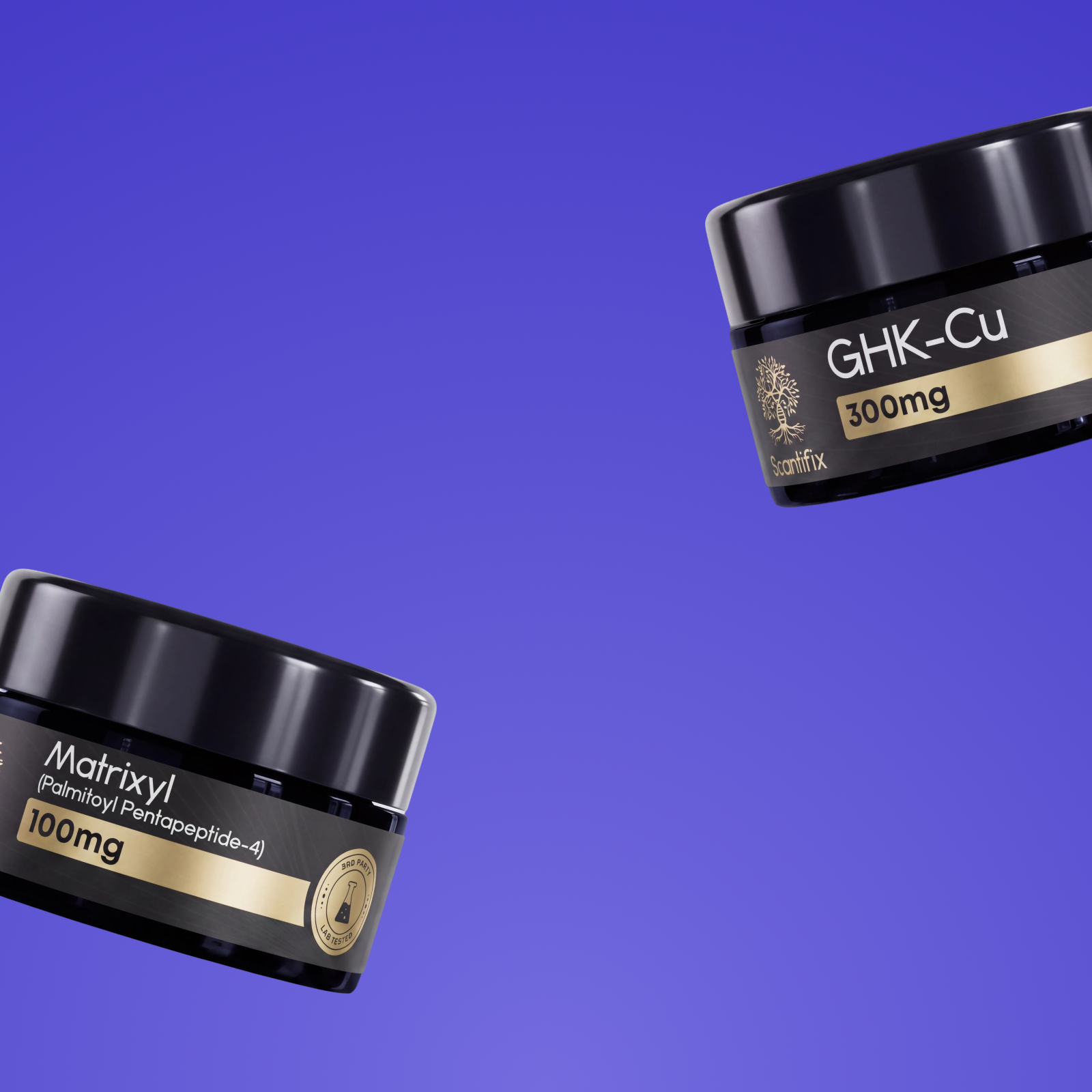
For example, peptide GHK-Cu has attracted attention for its association with tissue remodeling, extracellular matrix support, and wound healing pathways. Experimental studies have also explored its potential to support hair follicle biology by influencing dermal papilla cells, promoting angiogenesis, and creating an environment more favorable for healthy hair growth (Pickart & Margolina, 2018).
GHK-Biotin combines the regenerative properties of GHK with biotin, a vitamin involved in keratin production. It has been developed for topical hair care applications, where it is being investigated for its potential to support follicle anchoring, reinforce the extracellular matrix surrounding hair follicles, and promote a healthy scalp environment.
Zinc Thymulin has generated research interest for its possible involvement in follicle cycling and cellular signaling.
Although each peptide is being investigated for different biological processes, together they illustrate an important principle of hair biology: healthy follicle function depends on a complex interplay of structural support, cellular signaling, and the normal progression of the hair growth cycle.
Supporting the Biology Takes Time
It's helpful to think about hair as a living tissue rather than a finished product.
Unlike the visible portion of the hair shaft, which is no longer biologically active once it leaves the scalp, the follicle beneath the skin is constantly responding to its environment.
Healthy follicles require ongoing support to continue producing healthy hair.
That is why consistency matters far more than dramatic short-term interventions.
Rather than expecting overnight transformation, it is more realistic to view hair care as an investment in the next several months of growth.
Final Thoughts
Hair growth follows biology, not our calendars.
Every follicle operates according to its own cycle, and visible improvements depend on processes that begin long before a new hair reaches the surface of the scalp.
Understanding this timeline changes the question from "Why isn't it working?" to "Have I given my follicles enough time to respond?"
References
Alonso, L., & Fuchs, E. (2006). The hair cycle. Journal of Cell Science, 119(3), 391-393.
https://doi.org/10.1242/jcs.02793
Paus, R., & Cotsarelis, G. (1999). The biology of hair follicles. New England Journal of Medicine, 341(7), 491-497. https://doi.org/10.1056/NEJM199908123410706
Schneider, M. R., et al. (2009). The hair follicle as a dynamic miniorgan. Current Biology, 19(3), R132-R142. https://doi.org/10.1016/j.cub.2008.12.005
Stenn, K. S., & Paus, R. (2001). Controls of hair follicle cycling. Physiological Reviews, 81(1), 449-494. https://doi.org/10.1152/physrev.2001.81.1.449
Pickart, L., & Margolina, A. (2018). Regenerative and Protective Actions of the GHK-Cu Peptide in the Light of the New Gene Data. International Journal of Molecular Sciences, 19(7), 1987. https://doi.org/10.3390/ijms19071987



Leave a comment
All comments are moderated before being published.
This site is protected by hCaptcha and the hCaptcha Privacy Policy and Terms of Service apply.