


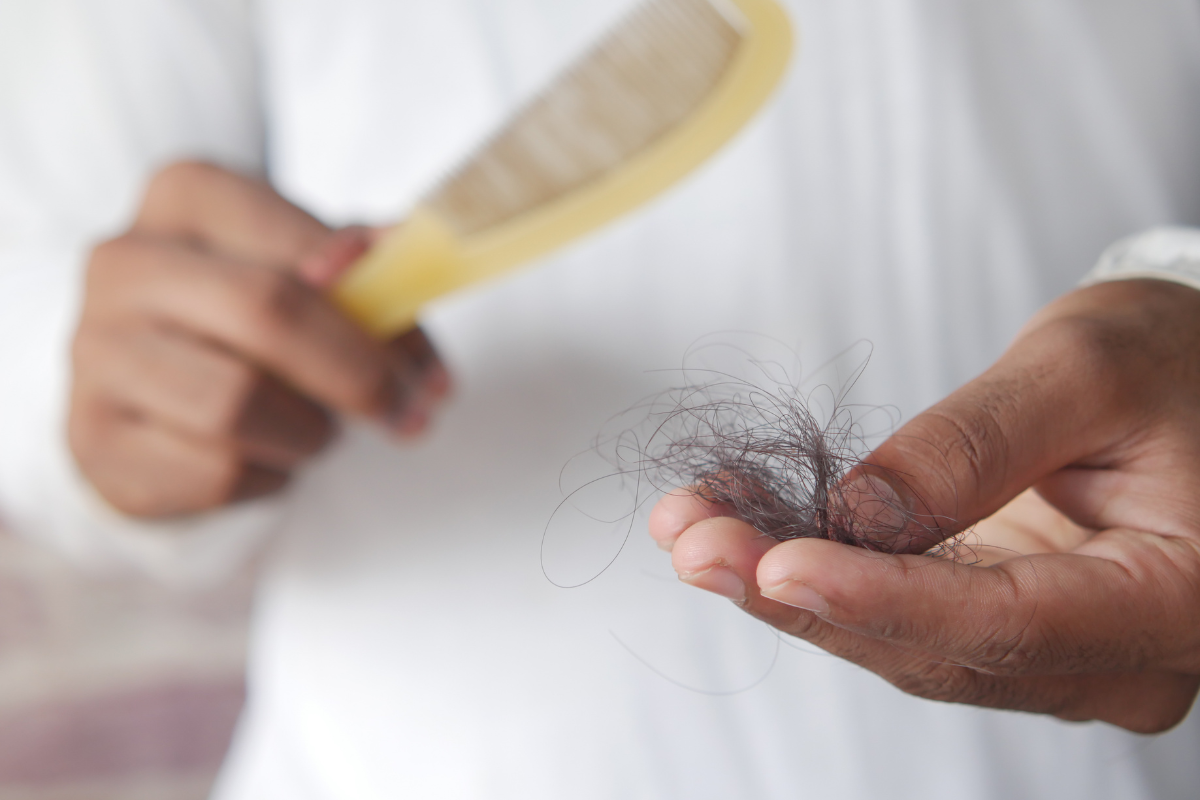
Seeing extra hair in the shower or on your brush can spark questions. Is this normal? Has it gotten worse? Should you be worried?
Some daily shedding is entirely expected and part of how hair grows. But when shedding seems heavier than usual, or when you start noticing changes in density, it's not always clear what you're dealing with. Shedding and hair loss are related but distinct, and the difference shapes how you respond.
This guide breaks down what each one actually is, how to tell the difference between hair shedding vs hair loss, and what you can do depending on what you're experiencing.
How Hair Growth Works
When hair grows, each follicle moves through a cycle: anagen (active growth), catagen (a brief transition), telogen (rest), and exogen (shedding). At the end of the cycle, a new hair begins growing in the follicle, pushing the old one out.
On a healthy scalp, roughly 85–90% of follicles are in the anagen phase at any given time, with the remainder resting or transitioning. Shedding is a natural and unavoidable part of this process. How much hair shedding is normal? Most people lose 50–100 hairs per day, though the number can look different depending on hair length, texture, and how often you wash or style.
What Is Hair Shedding?
Hair shedding is when hairs leave the follicle at the end of their natural cycle. When shedding stays within the normal range and regrowth follows, there's nothing to worry about.
Excessive shedding, or telogen effluvium, happens when a larger than usual number of follicles enter the resting phase at once, leading to noticeably more hair falling out (Malkud, 2015). It’s commonly caused by some kind of trigger like physical or emotional stress, illness, hormonal shifts such as postpartum changes, significant dietary changes, or nutritional gaps. The shedding typically appears two to three months after the triggering event, which makes the connection easy to miss.
The key characteristic of telogen effluvium is that it tends to resolve. Once the trigger is removed or addressed, the cycle normalizes and shedding returns to baseline. That said, if excessive shedding continues beyond six months, it's worth looking more closely at what might be sustaining it (Hughes et al., 2024).
What Is Hair Loss?
Hair loss is a different process. Instead of the hairs completing their cycle and shedding normally, hair loss involves a disruption at the follicle level that affects the hair's ability to grow back fully.
In androgenetic alopecia, the most common form, follicles gradually miniaturize in response to hormonal signals, producing finer, shorter strands until growth slows significantly (Oiwoh, 2024). The anagen phase shortens with each cycle. Over time, follicles may stop producing visible hair altogether. Unlike telogen effluvium (shedding), this process doesn't reverse on its own.
Other forms of hair loss have different mechanisms. Traction alopecia, for example, results from repeated mechanical tension on the follicle. Alopecia areata and certain scarring alopecias involve immune or inflammatory activity. What they share is that the follicle itself is affected, not just the cycle timing.
How to Tell Them Apart
The most useful question is whether regrowth is happening. With shedding, shorter regrowth hairs are usually visible along the hairline and part line. With hair loss, those hairs may be absent, finer than before, or slower to appear.
Onset and pattern also help. Shedding tends to be diffuse and relatively sudden, often linked to a specific period of stress or illness. Hair loss is usually more gradual, and often follows a recognizable pattern. If your ponytail feels thinner, your part looks wider, or you can see more scalp than you used to, that's more consistent with hair loss than normal shedding.
These signals can point you in the right direction, but self-assessment has limits. If you're unsure what you're dealing with, or if changes feel significant, a dermatologist can give you a clearer picture.
What You Can Do
Whether you're dealing with shedding or hair loss, the approach has two layers: addressing what might be disrupting the cycle, and actively supporting the conditions for healthy growth.
Address the underlying causes
If you’re trying to minimize hair shedding, start by looking at potential triggers. Significant stress, nutritional gaps, hormonal shifts, and mechanical stress from tight hairstyles or aggressive brushing can all interfere with the hair cycle. Managing stress, eating enough protein, iron, and zinc, and keeping your hair care routine gentle are foundational steps that benefit both shedding and hair loss.
Support the follicle environment
Beyond addressing triggers, actively supporting scalp and follicle health creates better conditions for the cycle to function well.
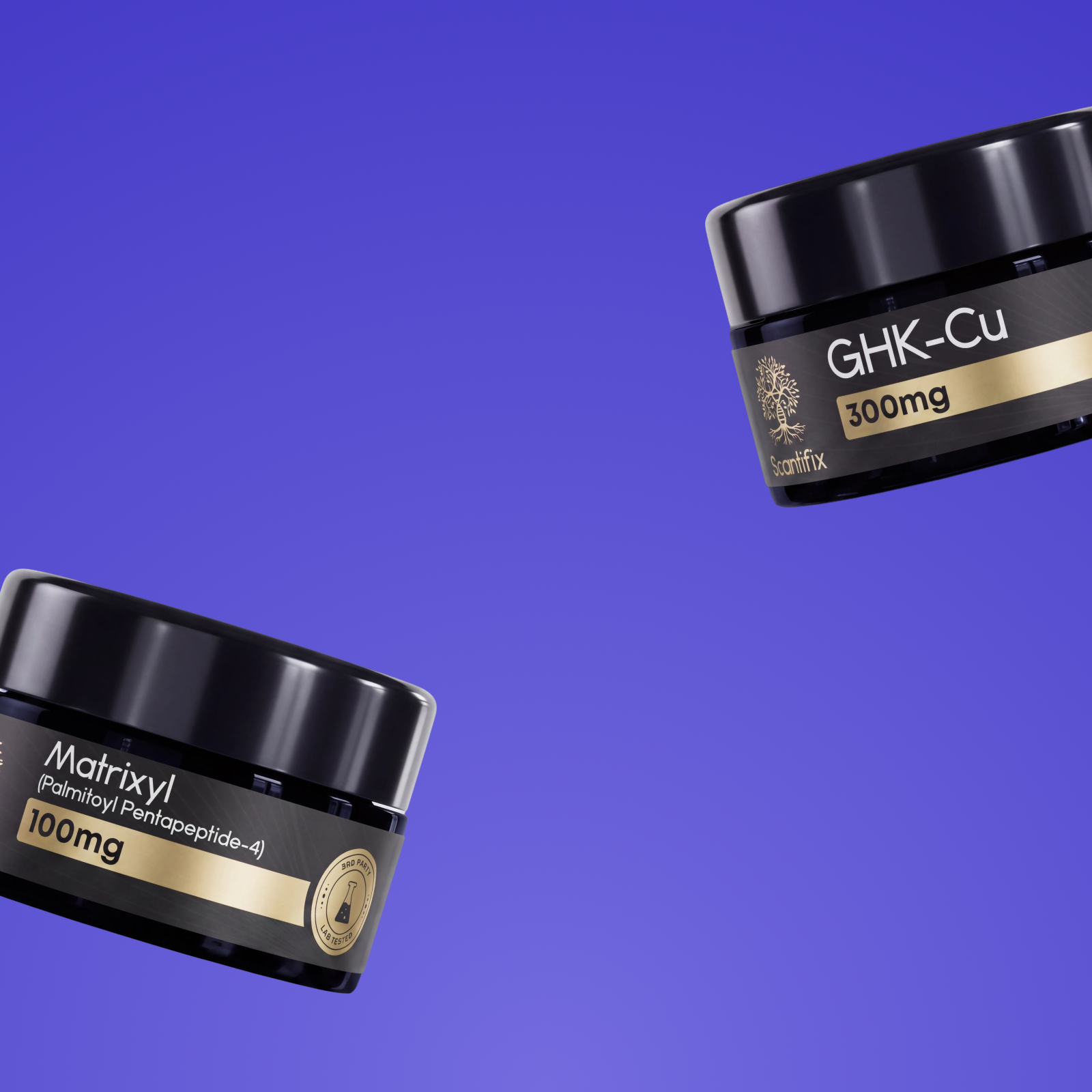
Topical peptides are a well-researched, gentle option for improving follicular function. GHK-Cu has been shown to stimulate dermal papilla cells, increase follicle size, and support the transition back into the growth phase (Pickart & Margolina, 2018). Another peptide, GHK-Biotin, combines the regenerative signaling of GHK with biotin's role in keratin production. Research suggests it can increase the proportion of follicles in the active growth phase and support stronger regrowth (Active Peptide Company, 2014).
Multi-peptide serums combine several of these ingredients in a single formula, which can be a good starting point for comprehensive support. Whatever you choose, quality matters. Always look for third-party testing, certificates of analysis, and clean ingredient lists.
Red light therapy is another research-backed option. It’s works by stimulating activity in hair follicle cells, helping boost energy production and supporting a healthier scalp environment. Research also suggests it may help extend the anagen phase, supporting more follicles in active growth. Clinical trials have shown meaningful increases in hair density with consistent use (Lanzafame et al., 2013).
Hair shedding and hair loss can be complicated, and the right approach isn't always straightforward. If shedding persists beyond a few months without a clear cause, or if you're noticing the pattern changes associated with hair loss, a dermatologist can help identify what's driving it and guide you toward the right approach.
How Scantifix Can Help
If you're looking to explore peptides or red light therapy, you don’t want to skip on quality. Impurities, irritation, and lack of results are real risks with low-quality products.
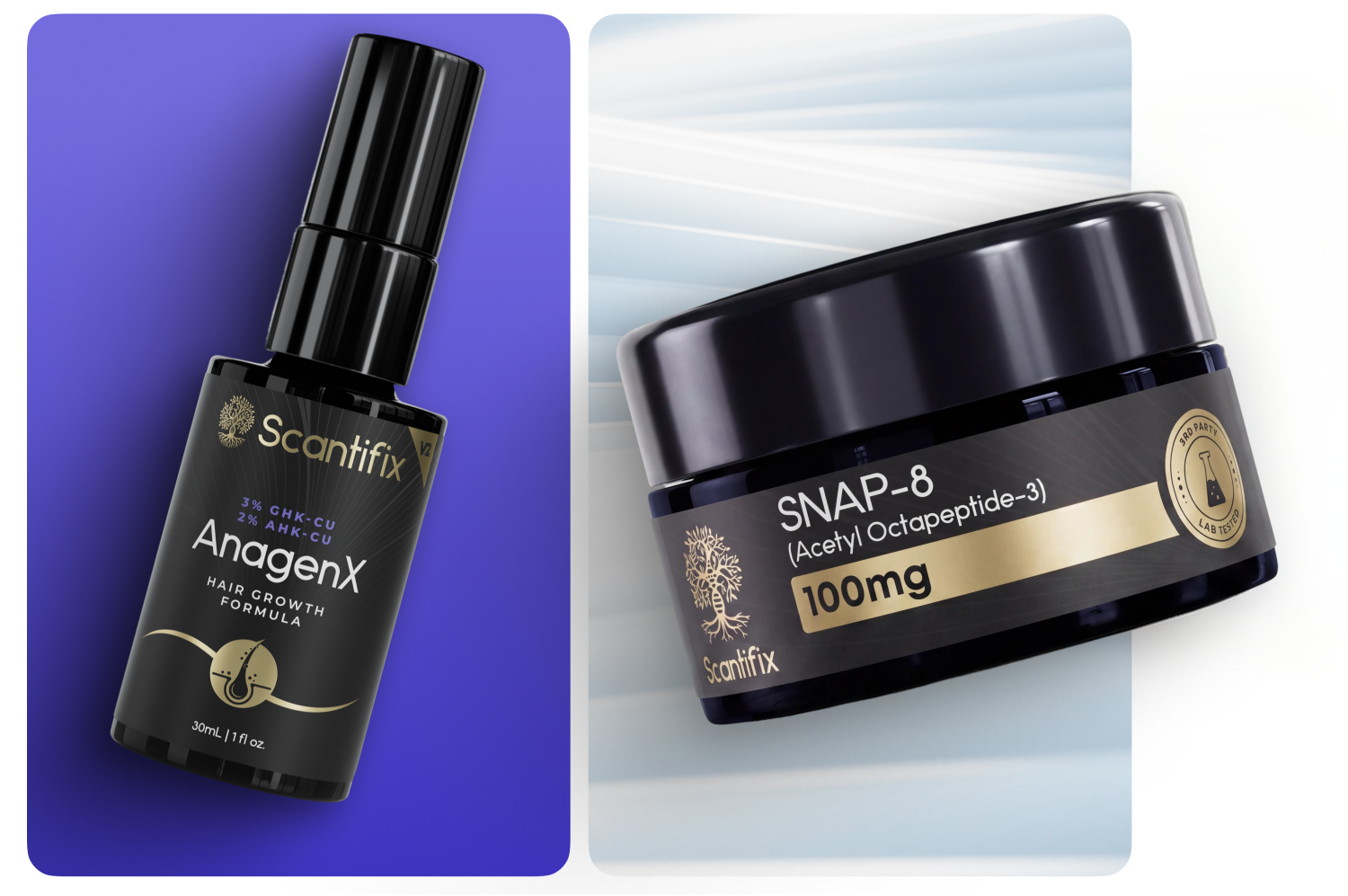
Every peptide in our catalog, including GHK-Cu, GHK-Biotin, and our multiple-peptide hair serum AnagenX, are clinical-grade quality and verified by third-party testing. You don’t have to take our word for it either. We provide certificates of analysis so you can confirm it for yourself. We also use MIRON Violetglass packaging to protect that high level ofxfhow quality from early degradation. And our devices like the Reviva Lux red light therapy mask are made from premium, skin-safe materials and designed for consistent, effective home use.
We believe everyone should have access to advanced, science-backed treatments they can actually trust.
Same Symptom, Different Story
Shedding and hair loss can look similar from the outside, but they're driven by different mechanisms and carry different implications. Shedding is usually temporary. Address the trigger and the cycle tends to normalize. Hair loss involves the follicle itself and generally requires more consistent, targeted attention to see results.
Understanding what you're dealing with is the most useful place to start. The right response depends on it. If you’re still unsure, consulting a professional is the best next step. But if you're ready to take action, Scantifix offers high-purity peptides and devices designed to support healthier hair at every stage.

Resources
Active Peptide Company. (2014). Biotin-GHK in hair follicle and hair loss: Scientific presentation. https://www.activepeptide.com/wp-content/uploads/2014/06/Biotin-GHK-Presentation-Active-Peptide-Company.pdf
Hughes, E. C., Syed, H. A., & Saleh, D. (2024). Telogen effluvium. In StatPearls. StatPearls Publishing. https://www.ncbi.nlm.nih.gov/books/NBK430848/
Lanzafame, R. J., Blanche, R. R., Bodian, A. B., Chiacchierini, R. P., Fernandez-Obregon, A., & Kazmirek, E. R. (2013). The growth of human scalp hair mediated by visible red light laser and LED sources in males. Lasers in Surgery and Medicine, 45(8), 487–495. https://doi.org/10.1002/lsm.22173
Malkud, S. (2015). Telogen effluvium: A review. Journal of Clinical and Diagnostic Research, 9(9), WE01–WE3. https://doi.org/10.7860/JCDR/2015/15219.6492
Oiwoh, S. O., Enitan, A. O., Adegbosin, O. T., Akinboro, A. O., & Onayemi, E. O. (2024). Androgenetic alopecia: A review. Nigerian Postgraduate Medical Journal, 31(2), 85–92. https://doi.org/10.4103/npmj.npmj_47_24
Pickart, L., & Margolina, A. (2018). Regenerative and protective actions of the GHK-Cu peptide in the light of the new gene data. International Journal of Molecular Sciences, 19(7), 1987. https://doi.org/10.3390/ijms19071987



Leave a comment
All comments are moderated before being published.
This site is protected by hCaptcha and the hCaptcha Privacy Policy and Terms of Service apply.