


The skin is remarkably selective about what it allows to pass through. Its outermost layer is designed to keep water in, while keeping bacteria, pollutants, and countless other substances out. It's an essential defense system, but one that also presents a challenge for topical skincare.
This raises an important question for peptides. If the skin barrier is so effective at blocking outside molecules, how do topical peptides reach the cells they're designed to support?
The answer lies in understanding how peptide absorption actually works. Factors such as molecular size, formulation, skin hydration, and application method all influence how effectively peptides interact with the skin. In this article, we'll explore what the research says about peptide delivery and the practical steps that can help maximize the effectiveness of a peptide serum.
Why the Skin Barrier Matters for Peptides Skincare
The outermost layer of the skin, known as the stratum corneum, serves as the body's primary protective barrier. It is often described as a "brick-and-mortar" structure, where skin cells act as the bricks and lipids fill the spaces between them (Elias, 2005; Madison, 2003).
This barrier has an important job: preventing water loss while protecting the body from bacteria, pollutants, and other environmental threats. As a result, it also limits how easily skincare ingredients can enter the skin (Elias, 2005).
This challenge isn't unique to peptides. Many well-known skincare ingredients, including vitamin C and retinoids, require carefully designed formulations to achieve effective penetration (Bos & Meinardi, 2000).
Understanding this helps set realistic expectations. The goal isn't to force peptides through the skin barrier, but to create conditions that allow them to interact with the layers where they can be most effective.
Can Peptides Penetrate the Skin
Not all peptides are the same. Their ability to interact with the skin depends on factors such as molecular size, amino acid sequence, stability, and the formulation in which they're delivered. Some peptides are better suited to topical application than others, and modern cosmetic peptides are often specifically designed with skin delivery in mind (Bos & Meinardi, 2000; Schagen, 2017).
It's also important to understand that peptides don't need to enter the bloodstream to be effective. Their role is to interact with cells within the viable epidermis and upper dermis, where they act as biological messengers that help support the skin's natural repair and renewal processes (Schagen, 2017; Pickart & Margolina, 2018).
Research suggests that appropriately formulated topical peptides can reach these target layers, particularly when applied under conditions that support absorption, such as healthy skin hydration and enhanced permeability (Lintner & Peschard, 2000; Schagen, 2017).
What Affects Peptide Serum Absorption
Several factors influence whether a peptide serum can reach the areas where it is intended to work.
Molecular Size
Generally speaking, smaller peptides penetrate more easily than larger protein molecules. Many cosmetic peptides are specifically designed to remain relatively small while maintaining their biological activity (Bos & Meinardi, 2000; Lintner & Peschard, 2000).
Formulation
The ingredients surrounding a peptide matter almost as much as the peptide itself. The right formulation helps maintain stability, keeps the peptide in close contact with the skin, and creates conditions that support diffusion through the outer barrier (Schagen, 2017).
Skin Hydration
Well-hydrated skin is naturally more permeable than dry skin. When the outer layer contains adequate moisture, ingredients are generally able to move through it more efficiently (Fluhr et al., 2008).
Skin Barrier Health
An intact, healthy skin barrier provides the ideal balance. While severe barrier damage can increase permeability, it also increases irritation and inflammation (Elias, 2005; Madison, 2003). Healthy skin tends to respond more consistently to peptide skincare over time.
Contact Time
A leave-on peptide serum provides considerably more opportunity for peptides to interact with the skin than a rinse-off product. Consistency also matters. Supporting the skin's natural renewal processes requires regular application rather than occasional use (Schagen, 2017; Lintner & Peschard, 2000).
Why Hyaluronic Acid Pairs Well with a Peptide Serum
Hyaluronic acid is often thought of simply as a hydrating ingredient, but its role extends beyond moisture alone.
By attracting and retaining water within the outer layers of the skin, hyaluronic acid helps maintain a hydrated surface that supports the movement of topical ingredients (Papakonstantinou et al., 2012; Salwowska et al., 2016).This makes it a well-suited carrier for reconstituting raw peptides before application.
Rather than forcing peptides through the skin barrier, hyaluronic acid creates a more favorable environment for absorption while improving comfort during application. It also helps keep peptides evenly distributed across the skin surface, maximizing contact time where absorption begins (Papakonstantinou et al., 2012).
This is one reason hyaluronic acid has become the preferred carrier for many advanced peptide skincare routines.
How Microneedling Changes Peptide Delivery
Microneedling is one of the most well-studied techniques for enhancing the delivery of topical skincare ingredients (Singh & Yadav, 2016).
Microneedling creates thousands of microscopic channels in the skin using very fine needles. These temporary pathways allow topical ingredients to move more easily through the outer skin barrier before naturally closing as the skin begins its repair process (Aust et al., 2008; Singh & Yadav, 2016).
Research has shown that microneedling can significantly improve the penetration of topical compounds while also stimulating the skin's natural renewal response. For peptide serums, this creates more favorable conditions for the active ingredients to interact with the viable layers of the skin where they are intended to work (Iriarte et al., 2017; Singh & Yadav, 2016).
When combined with a well-formulated peptide serum, microneedling offers a practical, science-backed approach to maximizing topical delivery.
Common Mistakes That Reduce Peptide Serum Effectiveness
Even a high-quality peptide serum may not perform as expected if it is used incorrectly.
Some of the most common mistakes include:
- Applying peptides to dehydrated skin.
- Using harsh cleansers that repeatedly disrupt the skin barrier.
- Expecting visible changes after only a few applications.
- Storing reconstituted peptides improperly.
- Using low-quality peptide formulations
Supporting absorption is rarely about finding a single "magic" ingredient. It is usually the result of creating the right conditions for the skin to receive and respond to peptides over time.
Building a Peptides Skincare Routine
Maximizing peptide absorption starts with understanding that no single product works in isolation. Hydration, delivery methods, and formulation all influence how effectively a peptide serum interacts with the skin.
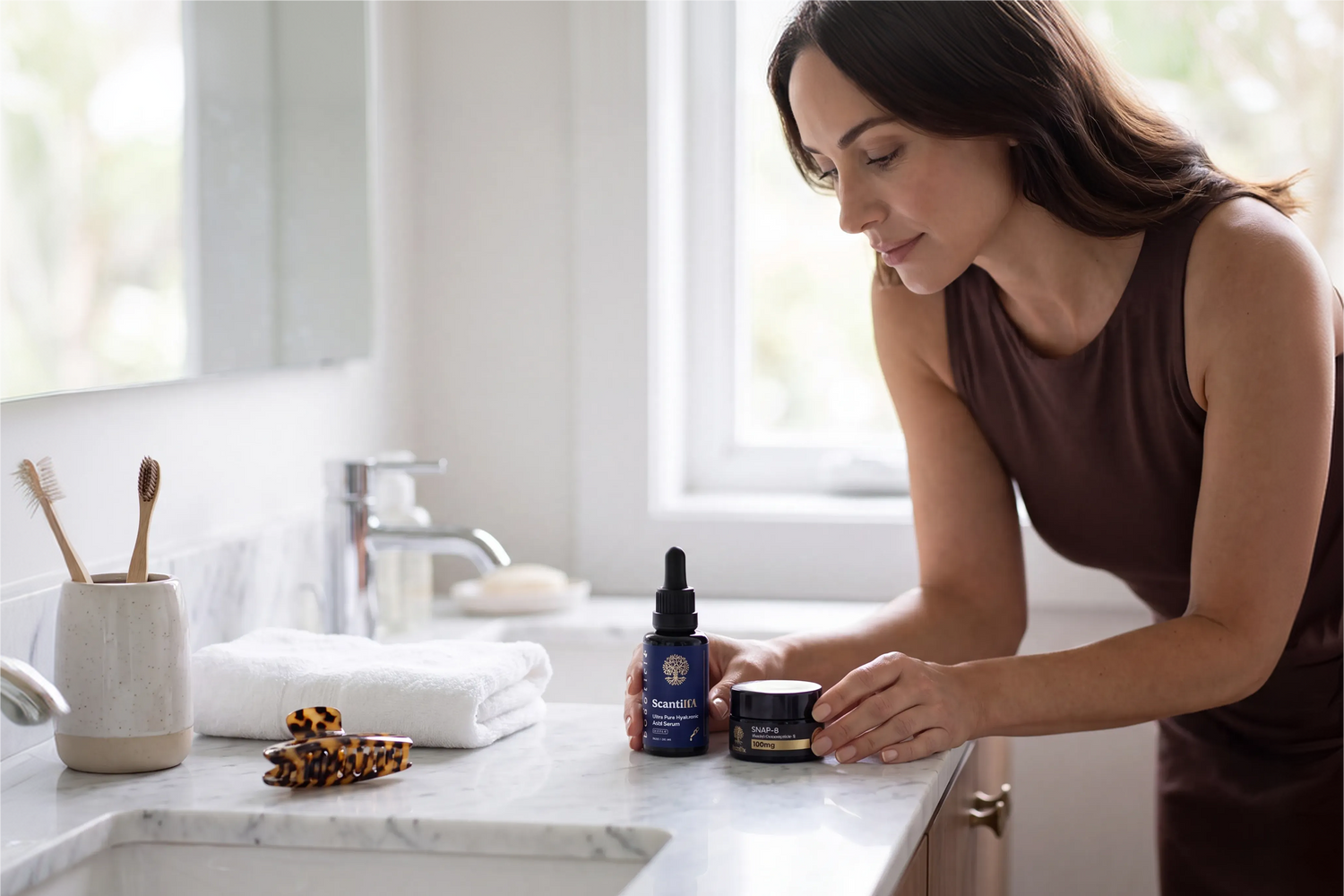
Our ScantiHA, hyaluronic acid serum, provides an ideal foundation by helping maintain skin hydration while serving as an excellent carrier for reconstituted raw peptides. Well-hydrated skin creates more favorable conditions for peptide absorption and comfortable daily use.
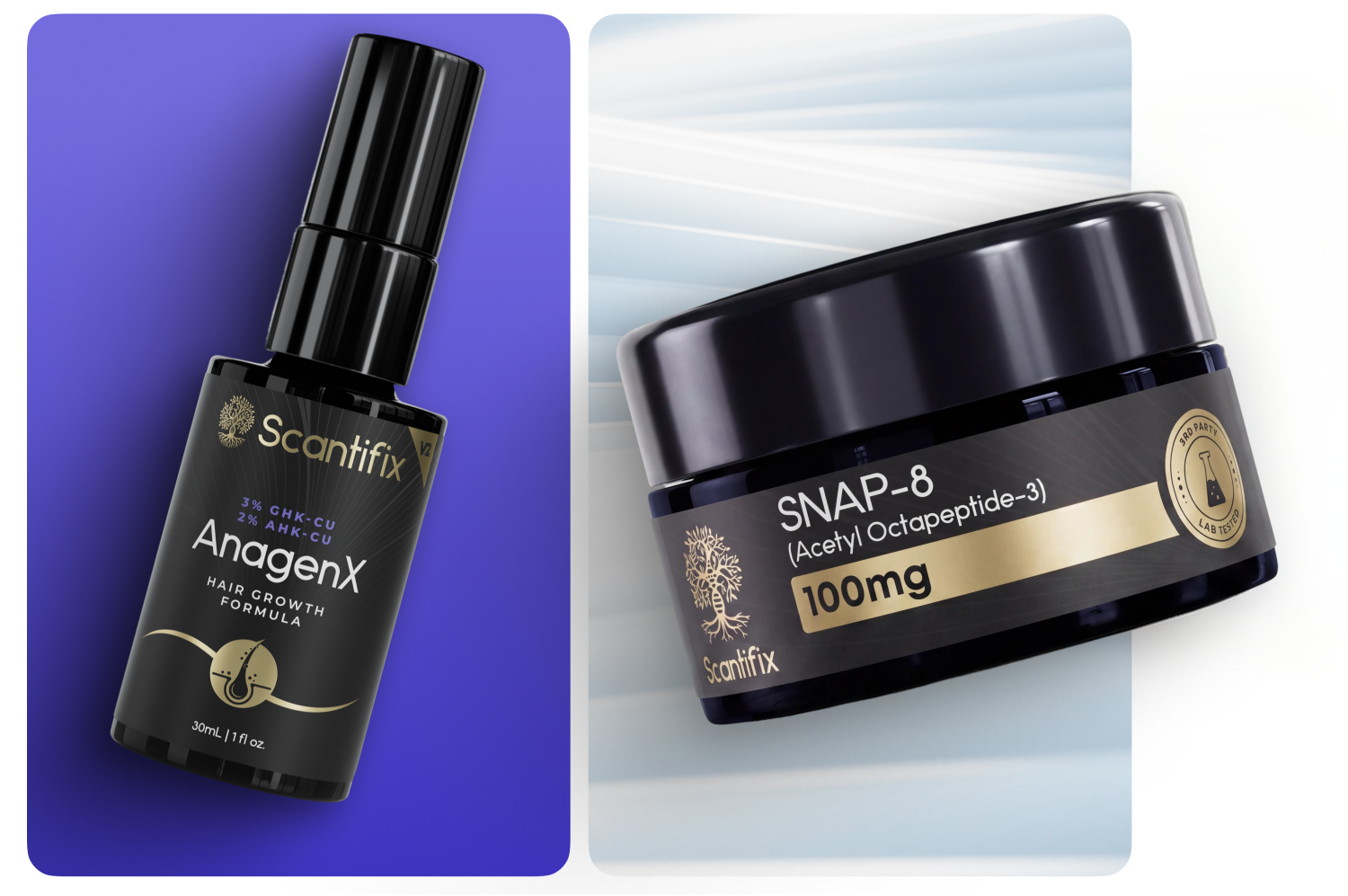
Ready-to-use peptide serums offer another option. Agelixir combines multiple advanced peptides in a professionally formulated serum designed to support the appearance of smoother, firmer, and more resilient skin, while AnagenX applies the same science-led philosophy to scalp care, helping support the environment surrounding healthy hair follicles.
The Bottom Line
The question isn't whether peptide serums work. It's under what conditions they work best.
Modern research shows that successful peptide absorption depends on several interconnected factors, including formulation, skin hydration, skin barrier health, and application technique. Understanding these variables helps explain why some peptides skincare routines produce better results than others.
At Scantifix, we believe effective skincare starts with understanding the biology behind it. By combining high-quality peptide serums with thoughtful delivery strategies, it's possible to create the conditions that help topical peptides perform at their full potential.
References:
Aust, M. C. et al. (2008). Percutaneous collagen induction therapy: An alternative treatment for scars, wrinkles, and skin laxity. Plastic and Reconstructive Surgery, 121(4), 1421–1429. https://doi.org/10.1097/01.prs.0000304612.72899.02
Bos, J. D., & Meinardi, M. M. H. M. (2000). The 500 Dalton rule for the skin penetration of chemical compounds and drugs. Experimental Dermatology, 9(3), 165–169. https://doi.org/10.1034/j.1600-0625.2000.009003165.x
Elias, P. M. (2005). Stratum corneum defensive functions: An integrated view. Journal of Investigative Dermatology, 125(2), 183–200. https://doi.org/10.1111/j.0022-202X.2005.23668.x
Iriarte, C. et al. (2017). Review of applications of microneedling in dermatology. Clinical, Cosmetic and Investigational Dermatology, 10, 289–298. https://doi.org/10.2147/CCID.S142450
Lintner, K., & Peschard, O. (2000). Biologically active peptides: From a laboratory bench curiosity to a functional skin care product. International Journal of Cosmetic Science, 22(3), 207–218. https://doi.org/10.1046/j.1467-2494.2000.00010.x
Madison, K. C. (2003). Barrier function of the skin: "La Raison d'Être" of the epidermis. Journal of Investigative Dermatology, 121(2), 231–241. https://doi.org/10.1046/j.1523-1747.2003.12359.x
Papakonstantinou, E. et al. (2012). Hyaluronic acid: A key molecule in skin aging. Dermato-Endocrinology, 4(3), 253–258. https://doi.org/10.4161/derm.21923
Pickart, L., & Margolina, A. (2018). Regenerative and protective actions of the GHK-Cu peptide in the light of the new gene data. International Journal of Molecular Sciences, 19(7), 1987. https://doi.org/10.3390/ijms19071987
Salwowska, N. M. et al. (2016). Physiochemical properties and application of hyaluronic acid: A systematic review. Journal of Cosmetic Dermatology, 15(4), 520–526. https://doi.org/10.1111/jocd.12237
Schagen, S. K. (2017). Topical peptide treatments with effective anti-aging results. Cosmetics, 4(2), 16. https://doi.org/10.3390/cosmetics4020016
Singh, A., & Yadav, S. (2016). Microneedling: Advances and widening horizons. Indian Dermatology Online Journal, 7(4), 244–254. https://doi.org/10.4103/2229-5178.185468


Leave a comment
All comments are moderated before being published.
This site is protected by hCaptcha and the hCaptcha Privacy Policy and Terms of Service apply.