


Peptides have become one of the most widely used ingredients in modern skincare. They appear in everything from anti-aging serums to eye creams, often promising smoother, firmer, or healthier-looking skin.
But how do they actually work?
One of the most studied groups is known as signal peptides. Rather than acting as moisturizers or antioxidants, these small protein fragments are designed to communicate with skin cells through biological signaling.
Understanding that communication helps explain why signal peptides have become such an important area of skincare research.
What Are Signal Peptides
To understand signal peptides, it first helps to understand what peptides are.
Peptides are short chains of amino acids, the same building blocks that form proteins such as collagen and elastin (Schagen, 2017). Because peptides are much smaller than full proteins, they can serve many different biological functions throughout the body. Not every peptide works the same way. Some transport minerals, others help defend against microorganisms, and some participate in wound healing or immune responses (Schagen, 2017).
Signal peptides are different. Rather than acting as structural components themselves, signal peptides function more like biological messengers. Their role is to help communicate information between cells, encouraging normal biological processes involved in maintaining healthy skin.
A useful way to think about them is this: Collagen is like the framework of a building. Signal peptides are more like the instructions sent to the construction crew. They don't build the structure themselves, but they help direct the work.
How Skin Cells Communicate
Your skin is far more active than it appears from the outside.
Every day, millions of skin cells are replaced while the deeper layers of the skin continuously remodel collagen, elastin, and other structural proteins. At the same time, the skin responds to sunlight, pollution, minor injuries, changes in hydration, and countless other environmental influences.
None of this happens by chance. Skin cells are constantly exchanging biochemical signals that help coordinate repair, renewal, inflammation, and tissue maintenance. Fibroblasts, the cells responsible for producing collagen and many components of the extracellular matrix, continuously respond to these molecular messages as they decide when and how much new structural material to produce (Varani et al., 2006).
Scientists often describe this as cell signaling. Rather than working independently, skin cells communicate through a complex network of naturally occurring molecules that tell neighboring cells when to activate, repair, or remodel tissue.
Signal peptides are designed to participate in this conversation.
Instead of introducing new collagen directly into the skin, they are intended to interact with signaling pathways already involved in normal skin biology.
How Signal Peptides Work
One of the reasons signal peptides have attracted so much scientific interest is that they work with biological processes the skin already uses every day.
As skin ages, these repair processes gradually become less efficient. Fibroblasts produce less collagen, existing collagen fibers become increasingly fragmented, and the extracellular matrix loses some of its organization and resilience (Fisher et al., 2002; Varani et al., 2006). The result is skin that is less able to recover from repeated mechanical stress, contributing to visible wrinkles and loss of firmness.
Signal peptides are being investigated because they may help support some of these same biological pathways.
Rather than replacing collagen or forcing the skin to behave differently, they are designed to interact with naturally occurring signaling mechanisms associated with tissue remodeling and skin renewal.
This distinction is important. Signal peptides should not be thought of as ingredients that "create collagen" on their own. Instead, they are intended to encourage skin cells to carry out processes they already perform naturally.
The exact response depends on the peptide itself. Different signal peptides have different amino acid sequences, meaning they interact with different biological targets and may influence different aspects of skin physiology.
That is why not all peptides produce the same cosmetic effects. Understanding these differences helps explain why peptide formulations often contain several peptides rather than relying on just one.
Different Signal Peptides, Different Messages
Although signal peptides are often grouped together in skincare, they do not all communicate the same message.
Each peptide has its own amino acid sequence and is designed to interact with different biological pathways. As a result, different peptides are investigated for different aspects of skin health and visible aging.
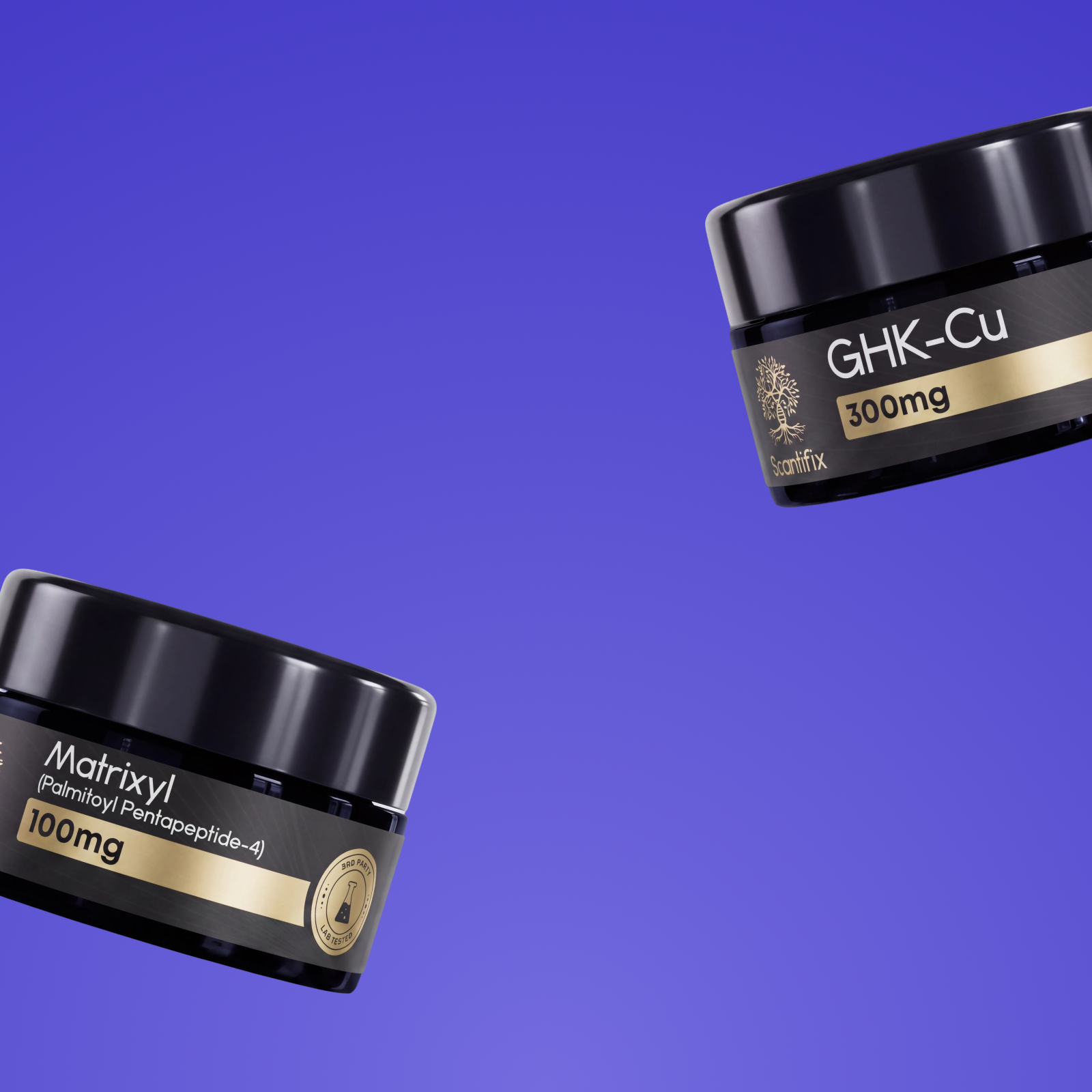
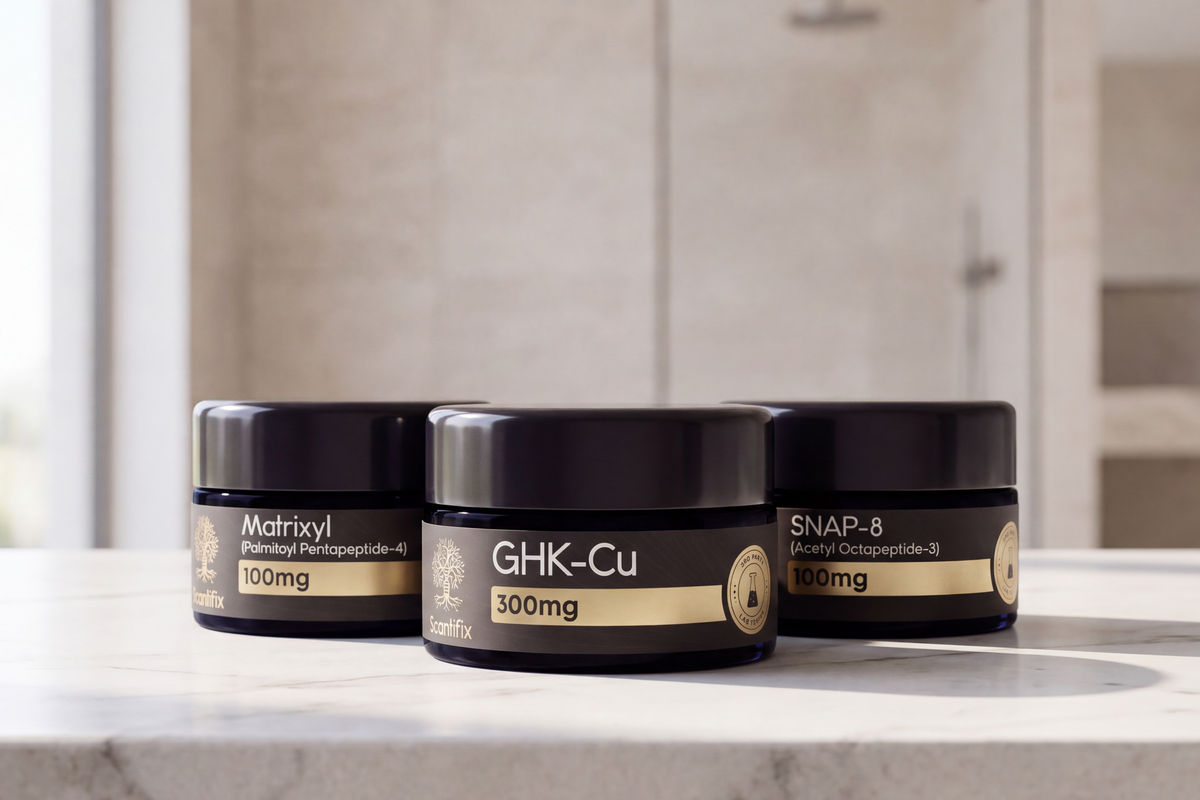
GHK-Cu is one of the most extensively studied cosmetic peptides. Naturally present in the human body, it has attracted significant scientific interest for its involvement in tissue repair, wound healing, collagen remodeling, and extracellular matrix organization. Laboratory studies suggest that GHK-Cu may influence genes associated with skin regeneration, antioxidant defenses, and collagen production, making it a key ingredient in many formulations designed to support skin firmness and overall skin quality (Pickart & Margolina, 2018).
Matrixyl, a family of palmitoylated peptides, is designed to support collagen-related signaling within the skin. Clinical and laboratory studies have investigated its ability to encourage fibroblasts to produce structural proteins associated with smoother, firmer-looking skin (Robinson et al., 2005).
Syn-Coll was developed to mimic a naturally occurring sequence involved in collagen organization. Rather than introducing new collagen directly, it is designed to support the biological pathways associated with maintaining the skin's structural framework.
Not every peptide communicates with fibroblasts, however.
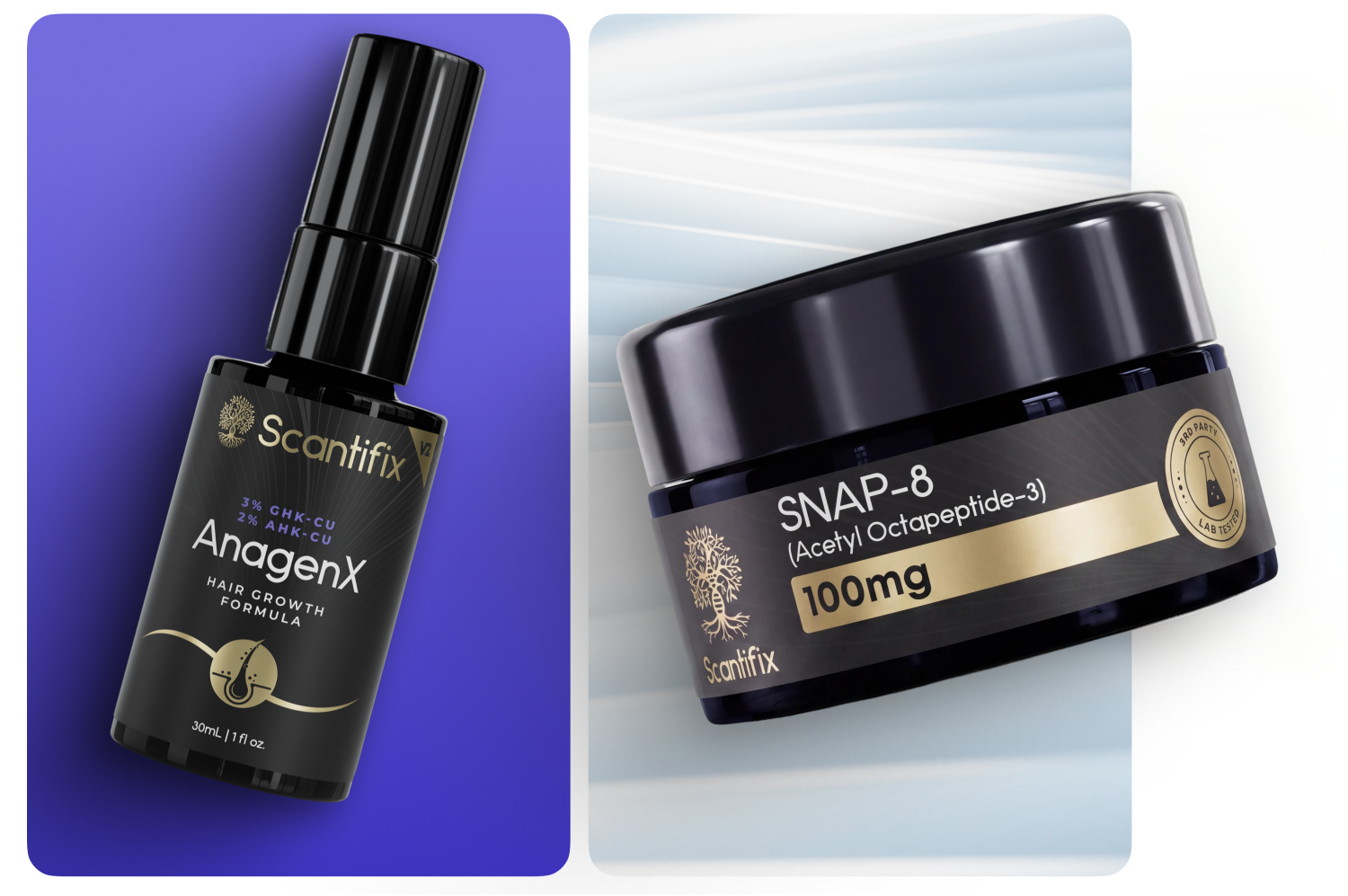
SNAP-8 works through a different biological pathway. Rather than focusing on collagen production, it was developed to influence signaling involved in facial muscle contraction. By targeting expression-related movement, it is commonly included in formulations designed for forehead lines, crow's feet, and other dynamic wrinkles.
Although these peptides all belong to the broader family of cosmetic peptides, they communicate with different biological systems and are intended to support different aspects of skin physiology.
Why Formulation Matters
Different signal peptides are designed to support different biological processes, but including more peptides in a formula does not automatically make it more effective. The performance of a peptide serum depends on much more than the ingredient list. Peptide concentration, stability, compatibility with other ingredients, formulation pH, and the ability of peptides to remain biologically active all influence how well a product performs (Schagen, 2017).
Delivery is equally important.
For a peptide to participate in biological signaling, it first needs to reach the layers of the skin where those interactions can occur. This is why formulation science plays such an important role in peptide skincare. The effectiveness of a finished product depends not only on which peptides are included, but also on how they are stabilized, combined, and delivered to the skin (Lupo & Cole, 2007).
For this reason, well-formulated peptide serums are designed as complete systems rather than collections of individual ingredients. Peptides are often paired with hydrating and barrier-supporting ingredients that help create an environment where the skin's natural repair processes can function effectively.
What Signal Peptides Can't Do
Signal peptides have become some of the most researched ingredients in cosmetic science, but it's equally important to understand their limitations.
They do not replace lost collagen overnight. They do not stop the natural aging process. And they do not produce the same effects as medical procedures or injectable treatments.
Instead, signal peptides are designed to support the skin's own biology. Their effects develop gradually as part of the skin's continuous remodeling process, which naturally unfolds over weeks and months rather than days.
This is why consistency remains one of the most important factors in any peptide-based skincare routine. Just like collagen remodeling itself, biological signaling is an ongoing process rather than a single event.
Final Thoughts
One of the most remarkable things about the skin is that its cells are constantly communicating.
Every day, countless biological signals help coordinate collagen production, tissue repair, barrier maintenance, and normal skin renewal. Signal peptides are designed to participate in that existing conversation rather than replace it.
Rather than viewing peptides as ingredients that directly "build" collagen or erase wrinkles, it is more accurate to see them as messengers that support the skin's natural biological processes. Different peptides communicate different messages, which is why ingredients such as GHK-Cu, Matrixyl, Syn-Coll, and SNAP-8 are investigated for different cosmetic purposes.
As research into skin biology continues to evolve, one principle remains remarkably consistent: healthy-looking skin depends not on a single ingredient, but on the complex network of biological signals that allows the skin to continuously repair, renew, and maintain itself.
REFERENCES
Fisher, G. J., et al. (2002) Mechanisms of Photoaging and Chronological Skin Aging. Archives of Dermatology, 138(11), 1462–1470. https://doi.org/10.1001/archderm.138.11.1462
Lupo, M. P., & Cole, A. L. (2007) Cosmeceutical Peptides. Dermatologic Therapy, 20(5), 343–349. https://doi.org/10.1111/j.1529-8019.2007.00148.x
Pickart, L., & Margolina, A. (2018) Regenerative and Protective Actions of the GHK-Cu Peptide in the Light of the New Gene Data. International Journal of Molecular Sciences, 19(7), 1987. https://doi.org/10.3390/ijms19071987
Robinson, et al. (2005) Topical Palmitoyl Pentapeptide Provides Improvement in Photoaged Human Facial Skin. International Journal of Cosmetic Science, 27(3), 155–160. https://pubmed.ncbi.nlm.nih.gov/18492182/
Schagen, S. K. (2017) Topical Peptide Treatments with Effective Anti-Aging Results. Cosmetics, 4(2), 16. https://doi.org/10.3390/cosmetics4020016
Varani, J., et al. (2006) Decreased Collagen Production in Chronologically Aged Skin: Roles of Age-Dependent Alteration in Fibroblast Function and Defective Mechanical Stimulation. The American Journal of Pathology, 168(6), 1861–1868. https://doi.org/10.2353/ajpath.2006.051302


Leave a comment
All comments are moderated before being published.
This site is protected by hCaptcha and the hCaptcha Privacy Policy and Terms of Service apply.