


Some skincare products make an immediate impression. A moisturizer may leave the skin feeling softer within minutes. An exfoliating treatment can make the complexion look brighter after a single use.
Peptide skincare is different. Rather than creating an instant cosmetic effect, peptides are designed to support biological processes that naturally unfold over time. Understanding that timeline helps explain when visible improvements are most likely to appear.
Why Results Take Time
One of the reasons peptide skincare can feel different from other products is that it isn't designed to create an immediate cosmetic effect.
Instead, peptides are investigated for their ability to support biological processes that are already taking place within the skin. These include pathways involved in collagen production, tissue remodeling, skin renewal, and communication between skin cells (Schagen, 2017; Pickart & Margolina, 2018).
The skin itself is constantly changing. Every day, old skin cells are shed, new ones move toward the surface, and structural proteins such as collagen and elastin are continuously broken down and rebuilt. These processes happen gradually, not overnight (Varani et al., 2006).
Because peptide skincare works with this natural biology rather than replacing it, visible improvements typically develop over weeks or months rather than days.
What Happens During the First Few Weeks?
One of the biggest misconceptions about skincare is that if you can't see a difference immediately, nothing is happening.
In reality, many of the earliest changes are subtle.
During the first few weeks of a new skincare routine, your skin continues carrying out the same processes it does every day - repairing its barrier, renewing surface cells, maintaining hydration, and responding to environmental stress. Although these changes may already be taking place, they are often too gradual to produce dramatic differences in the mirror.
This is particularly true for products designed to support long-term skin health. Biological processes such as skin renewal and tissue remodeling follow their own natural timeline, which means visible improvements often appear only after those underlying changes have had time to accumulate.
For many people, the first noticeable difference isn't necessarily fewer wrinkles. Instead, the skin may begin to feel smoother, appear more hydrated, or develop a healthier overall appearance as the routine becomes established.
A Realistic Timeline
Every person's skin is different, so no skincare product can guarantee that visible improvements will appear on a specific day. Age, skin condition, sun exposure, lifestyle, and consistency all influence how quickly changes become noticeable.
Even so, many clinical studies evaluating peptide-based skincare measure results over several weeks or months rather than days, providing a useful framework for setting realistic expectations.
Weeks 1–2
Most of the activity is happening beneath the surface.
Your skin is adjusting to the routine while continuing its normal renewal processes. Visible changes are often minimal, although some people notice improved hydration or smoother-feeling skin depending on the rest of their routine.
Weeks 3–6
Subtle improvements may begin to appear.
Skin texture may look more even, and the complexion may appear healthier or more refreshed. These changes are often gradual and can be easier to notice in photographs taken several weeks apart than from looking in the mirror each morning.
Months 2–3
This is the stage when many studies begin reporting measurable cosmetic improvements from peptide formulations (Robinson et al., 2005; Schagen, 2017).
Depending on the ingredients and the individual's skin, improvements in firmness, elasticity, and the appearance of fine lines may become more noticeable. Expression lines may also appear softer when formulations include peptides designed to support dynamic wrinkles.
Beyond Three Months
Healthy skin is never static.
Just as the skin continues renewing itself throughout life, peptide skincare is generally intended to provide ongoing support rather than a one-time transformation. Continued use may help maintain the improvements that have already developed while supporting the skin's natural repair processes over the long term.
Why Different Peptides Produce Different Results
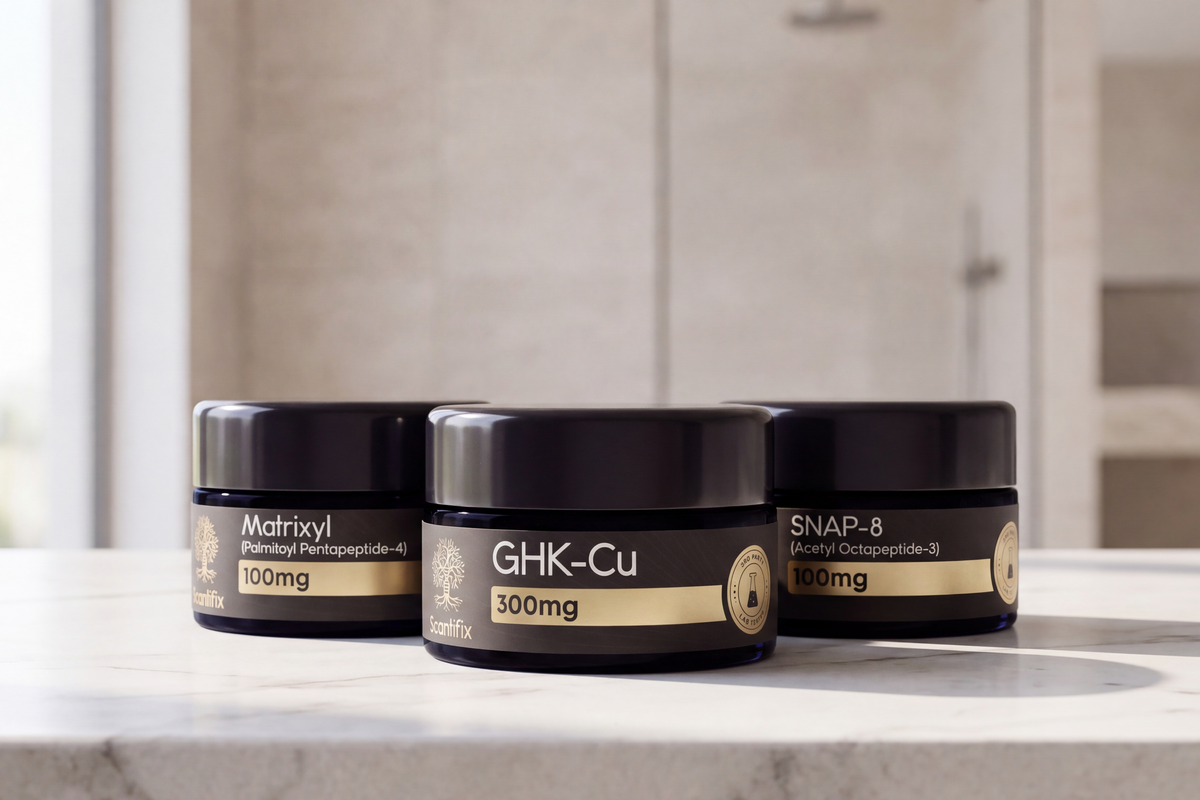
For example, GHK-Cu is one of the most extensively studied cosmetic peptides. Research suggests it may support processes involved in tissue repair, extracellular matrix organization, antioxidant defenses, and collagen production (Pickart & Margolina, 2018). Because these are gradual biological processes, improvements associated with skin firmness and overall skin quality may take time to become noticeable.
Matrixyl peptides are designed to support collagen-related signaling by encouraging fibroblasts to produce structural proteins associated with smoother, firmer-looking skin. Clinical studies have reported improvements in photoaged skin following consistent topical use over several weeks (Robinson et al., 2005).
SNAP-8 works through a different mechanism. Rather than focusing primarily on collagen-related pathways, it was developed to influence signaling associated with facial muscle contraction. As a result, it is commonly included in formulations targeting expression lines such as forehead wrinkles and crow's feet.
Understanding these differences helps explain why two peptide serums may not produce identical results, even when both are supported by scientific research. Each peptide is designed to communicate with different biological pathways, and those pathways contribute to different aspects of healthy-looking skin.
What Influences Your Results?
The ingredients in a serum are only part of the story.
How quickly you notice visible improvements also depends on the condition of your skin and the routine surrounding the product.
Several factors can influence your results, including:
- Consistency. Regular application provides ongoing support for the biological processes peptides are designed to influence.
- Age. Natural collagen production gradually declines over time, meaning visible improvements may develop differently at different stages of life.
- Sun exposure. Ultraviolet radiation accelerates collagen breakdown and remains one of the most significant contributors to visible skin aging (Fisher et al., 2002).
- Overall skin health. A healthy skin barrier and well-hydrated skin provide a stronger foundation for any skincare routine.
- Product formulation. Peptide concentration, stability, and delivery all influence how effectively a formulation performs (Schagen, 2017).
These factors help explain why two people using the same product may notice improvements at different rates.
Why Consistency Still Matters
Peptide skincare isn't designed to create one dramatic biological event.
Instead, it is intended to provide repeated support for processes that naturally occur within the skin every day.
Each application gives the skin another opportunity to receive the biological signals associated with tissue renewal, collagen maintenance, and healthy skin function. While a single application is unlikely to produce a visible transformation, consistent use allows those small changes to accumulate over time.
This gradual approach reflects the way healthy skin naturally works. Rather than changing overnight, it continuously repairs, renews, and remodels itself throughout life.
That is why the most meaningful improvements are often seen not after a few applications, but after several months of consistent care.
Final Thoughts
Healthy skin follows its own biological timeline. Cell turnover, collagen remodeling, and tissue renewal are continuous processes that unfold gradually, not overnight.
Peptides are designed to support those natural processes rather than replace them. Understanding that makes it easier to set realistic expectations, stay consistent with your routine, and evaluate your results over the weeks and months when meaningful changes are most likely to appear.
References
Fisher, G. J., et al. (2002). Mechanisms of Photoaging and Chronological Skin Aging. Archives of Dermatology, 138(11), 1462–1470. https://doi.org/10.1001/archderm.138.11.1462
Pickart, L., & Margolina, A. (2018). Regenerative and Protective Actions of the GHK-Cu Peptide in the Light of the New Gene Data. International Journal of Molecular Sciences, 19(7), 1987. https://doi.org/10.3390/ijms19071987
Robinson, L. R., et al. (2005). Topical Palmitoyl Pentapeptide Provides Improvement in Photoaged Human Facial Skin. International Journal of Cosmetic Science, 27(3), 155–160. https://pubmed.ncbi.nlm.nih.gov/18492182/
Schagen, S. K. (2017). Topical Peptide Treatments with Effective Anti-Aging Results. Cosmetics, 4(2), 16. https://doi.org/10.3390/cosmetics4020016
Varani, J., et al. (2006). Decreased Collagen Production in Chronologically Aged Skin: Roles of Age-Dependent Alteration in Fibroblast Function and Defective Mechanical Stimulation. American Journal of Pathology, 168(6), 1861–1868. https://doi.org/10.2353/ajpath.2006.051302

Leave a comment
All comments are moderated before being published.
This site is protected by hCaptcha and the hCaptcha Privacy Policy and Terms of Service apply.