
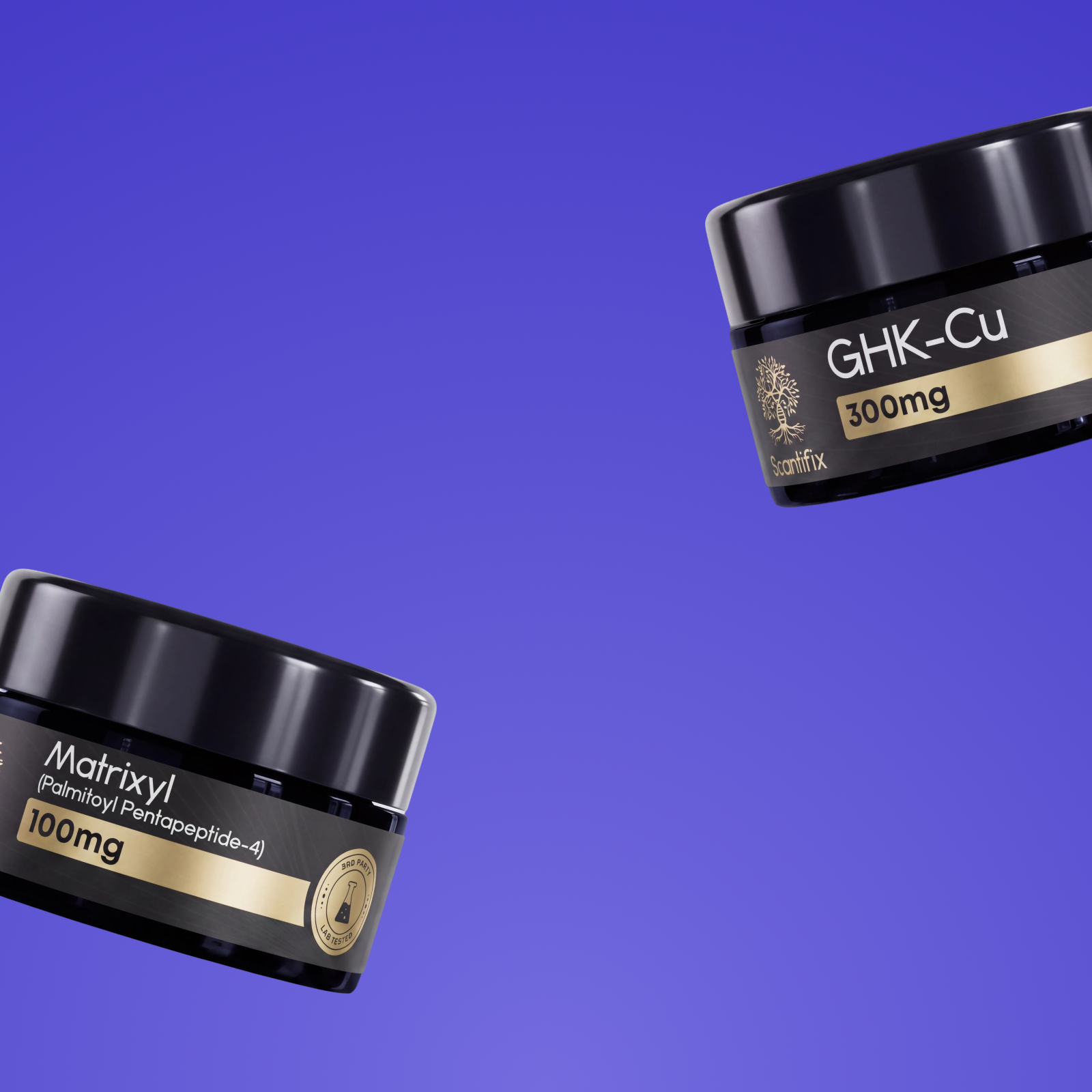


Interest in fuller lashes and brows has driven a flood of growth-focused products, many promising dramatic results through aggressive stimulation. The most effective products on the market work by chemically extending growth cycles, but that approach comes with documented tradeoffs that not everyone is willing to accept.
Peptides offer a different strategy. Rather than forcing follicles into extended growth cycles, peptides work as biological signals that support the follicle environment. For an area as sensitive as the eyes, this signaling-based approach reduces the risk of irritation and side effects while creating conditions for stronger, healthier lashes and brows.
Here's what you need to know about how lash and brow growth works, the tradeoffs of common growth serums, and how peptides offer a gentler alternative.
Understanding Lash and Brow Growth
Lash and brow follicles move through three distinct phases: anagen (active growth), catagen (transition), and telogen (rest). The anagen phase is particularly brief. Lashes grow actively for only 30-45 days, while brows have a slightly longer window at 2-4 months. This short growth period explains why lashes and brows have natural length limits. The hair simply doesn't have enough time to grow beyond a certain point before the follicle transitions out of anagen.
At any given time, most lash and brow follicles are in telogen rather than actively growing. This means that visible improvements from any treatment happen gradually, since only a small percentage of follicles are in the growth phase at once.
These follicles are also smaller and more superficial than those elsewhere on the body, sitting closer to the skin surface where they're more exposed to environmental stress. The skin around the eyes is thinner and more reactive, which means chronic irritation can more easily disrupt follicle function and push hairs into premature resting phases.
Daily habits add another layer of stress. Makeup application and removal, grooming, and general handling create ongoing mechanical trauma. Because lash and brow hairs are fine and easily damaged at the root, even low-grade repetitive stress can affect how well follicles function over time.
This context matters when considering growth treatments. Approaches that artificially extend the anagen phase beyond its natural window can exhaust follicles or trigger inflammation. The goal should be supporting follicles through their natural cycles rather than forcing them into unsustainable states.
Why Many Lash and Brow Growth Serums Come With Tradeoffs
Prostaglandin analogs are the most common active ingredients in prescription and some over-the-counter growth serums. These are products specifically designed to stimulate lash and brow growth—not to be confused with standard mascaras or brow grooming products. These compounds extend the anagen phase beyond its typical window, allowing lashes and brows to grow longer than they would naturally.
But extending anagen comes with documented side effects. The most common include periorbital hyperpigmentation (darkening of the eyelid skin), eye irritation, and redness. Less common, but still reported, are changes in iris pigmentation and periorbital fat loss that can create a sunken appearance around the eyes—effects observed in human studies of prostaglandin-based lash treatments (Rodríguez-Agramonte et al., 2017; Jayaprakasam & Ghazi-Nouri, 2010).
Not everyone experiences these effects, but for some people, the tradeoff isn't worth it. This is where interest in alternative approaches has grown. Rather than chemically forcing the follicle to stay in anagen longer, gentler signaling-based methods aim to support the follicle environment so it can function optimally within its natural cycle.
Peptides as a Gentler Approach to Lash and Brow Care
Peptides are short chains of amino acids that function as biological messengers. In skincare and hair care, peptides signal cells to perform specific activities like producing collagen, regulating inflammation, or supporting tissue repair. They don't force biochemical changes. They encourage processes the body already knows how to do.
This distinction matters when working near the eyes. The follicles and surrounding tissue in this area are more reactive and less forgiving of harsh interventions. Peptides work with the follicle's existing biology rather than overriding it, which reduces the risk of irritation.
For lashes and brows specifically, peptides target the underlying health of the follicle rather than manipulating the growth cycle directly. This means focusing on reducing inflammation, supporting tissue repair, and creating an environment where follicles can complete healthy growth cycles.
GHK-Cu: Supporting the Follicle Microenvironment
Copper peptide GHK-Cu is a naturally occurring tripeptide that binds copper ions and plays a role in tissue repair and regeneration. One of its key functions is supporting angiogenesis, the formation of new blood vessels (Pickart et al., 2012). Follicles depend on adequate blood flow to deliver nutrients during the anagen phase.
GHK-Cu also modulates inflammation by influencing cytokine production and other inflammatory mediators (Pickart et al., 2015). Chronic low-grade inflammation is common in the periorbital area, often caused by makeup or mechanical stress. The peptide also supports extracellular matrix remodeling, encouraging the production of structural proteins like collagen while supporting the breakdown of damaged tissue (Pickart, 2008).
For lashes and brows, these combined actions support better retention and reduce premature shedding.
GHK-Biotin: Structural and Metabolic Support for Fragile Hair
GHK-Biotin combines the signaling properties of GHK with biotin's metabolic functions. Biotin is involved in energy production and protein synthesis, both of which are essential for the cells responsible for building the hair shaft.
Given the frequent stress lashes and brows face from grooming and makeup, combined with their naturally fine structure, they benefit from metabolic support that strengthens hair from within. GHK-Biotin may support the energy production and protein synthesis that cells need to build strong hair fibers. When these processes function optimally, cells can produce keratin more effectively (Patel et al., 2017).
For lashes and brows, GHK-Biotin supports the production of hair that can better resist breakage and premature loss. It doesn't extend the anagen phase, but it helps ensure that the hair produced during anagen is as strong and well-anchored as possible.
What to Expect from Peptide-Based Lash and Brow Care
It’s important to set realistic expectations. Peptides won't produce the dramatic length extensions that prostaglandin analogs can deliver. They work within your biological limits, not beyond them.
What peptides can support is reduced shedding and improved retention. When follicles are healthier and less inflamed, hairs are less likely to shed prematurely. This creates the appearance of fuller lashes and brows over time. Hairs that are well-nourished and structurally sound may appear slightly darker, more lustrous, or more resilient.
Peptides also support long-term follicle health. Unlike approaches that force extended growth cycles, peptides help maintain the conditions follicles need to function well cycle after cycle. The improvements you see are more likely to be sustainable without creating dependency.
Consistency matters more than intensity. Results won't appear overnight, but with regular use over weeks to months, you're more likely to see improvements in retention, resilience, and overall appearance.
Supporting Lash and Brow Health Holistically
Peptides work best when the rest of your routine supports follicle health. Minimizing irritation is foundational. Use gentle makeup removers, avoid harsh rubbing, and choose products formulated for sensitive skin. Be mindful of mechanical stress from eyelash curlers and aggressive grooming.
If you use lash extensions, consider taking breaks to allow follicles to recover. Continuous wear can stress follicles and lead to thinning. Adequate nutrition and hydration also play a role, as follicles need nutrients to function optimally.
When you're ready to incorporate peptides into this foundation of gentle care, quality and formulation matter.
How to Incorporate Peptides Into a Lash and Brow Care Routine
The eye area has less tolerance for impurities or complex formulations. This means ingredient quality should be a main priority.
Peptide-based options are available in different formats. Some products come as ready-to-use serums with peptides formulated into a stable base. Others are available as raw peptides in their pure form, which need to be reconstituted with a compatible liquid carrier. Both approaches can work, but they require certain levels of quality control.
For pre-made serums, look for products with transparent ingredient lists, clear peptide concentrations, and Certificates of Analysis. Third-party testing for identity, purity and concentration adds quality assurance.
For those interested in working with raw peptides, research-grade purity is essential. Cosmetic-grade peptides often range from 80-95% purity, but research-grade peptides reach 99% or higher. This difference matters when you're applying something near the eyes daily. You’ll want to look for third-party testing and COAs here too.
The eye area requires extra caution. If you're uncertain about incorporating peptides near your eyes or have concerns about sensitivity, irritation, or existing eye conditions, consult with a dermatologist or healthcare professional before starting any new treatment.
Key Takeaways: Supporting Natural Growth Potential
The demand for fuller lashes and brows isn't going away, but the tools available to address it are evolving. Prostaglandin analogs deliver results by forcing follicles beyond their natural limits, but that approach comes with known risks. Peptides offer a different path: working within the biology of lash and brow growth for a gentler, more sustainable approach to healthier lash and brow growth.
References
Jayaprakasam, A., & Ghazi-Nouri, S. (2010). Periorbital Fat Atrophy — An Unfamiliar Side Effect of Prostaglandin Analogues. Orbit, 29(6), 357–359. https://doi.org/10.3109/01676830.2010.527028
Patel, D. P., Swink, S. M., & Castelo-Soccio, L. (2017). A review of the use of biotin for hair loss. Skin Appendage Disorders, 3(3), 166–169. https://doi.org/10.1159/000462981
Pickart, L. (2008). The human tri-peptide GHK and tissue remodeling. Journal of Biomaterials Science, Polymer Edition, 19(8), 969–988. https://doi.org/10.1163/156856208784909435
Pickart, L., Vasquez-Soltero, J. M., & Margolina, A. (2012). The human tripeptide GHK-Cu in prevention of oxidative stress and degenerative conditions of aging: Implications for cognitive health. Oxidative Medicine and Cellular Longevity, 2012, Article 324832. https://doi.org/10.1155/2012/324832
Pickart, L., Vasquez-Soltero, J. M., & Margolina, A. (2015). GHK peptide as a natural modulator of multiple cellular pathways in skin regeneration. BioMed Research International, 2015, Article 648108. https://doi.org/10.1155/2015/648108
Rodríguez-Agramonte, F., Jimenez, J. C., & Montes, J. R. (2017). Periorbital Changes associated with Topical Prostaglandins Analogues in a Hispanic Population. Puerto Rico Health Sciences Journal, 36(4), 218–222. https://pubmed.ncbi.nlm.nih.gov/29220066/

Leave a comment
All comments are moderated before being published.
This site is protected by hCaptcha and the hCaptcha Privacy Policy and Terms of Service apply.