


If you've spent any time in skincare communities online, you've probably heard someone mention experiencing a "peptide purge" after starting a new peptide serum. The term is used to describe breakouts that appear shortly after introducing peptides into a routine. But here's the thing: biology says otherwise.
Purging is a real dermatological phenomenon, but it only happens with specific types of ingredients that work in specific ways. Peptides don't fall into that category. So if you're breaking out after starting a peptide product, something else is likely happening. This article explains what purging actually means, why peptides can't cause it, and what might really be behind those unexpected breakouts.
What Purging Actually Means in Dermatology
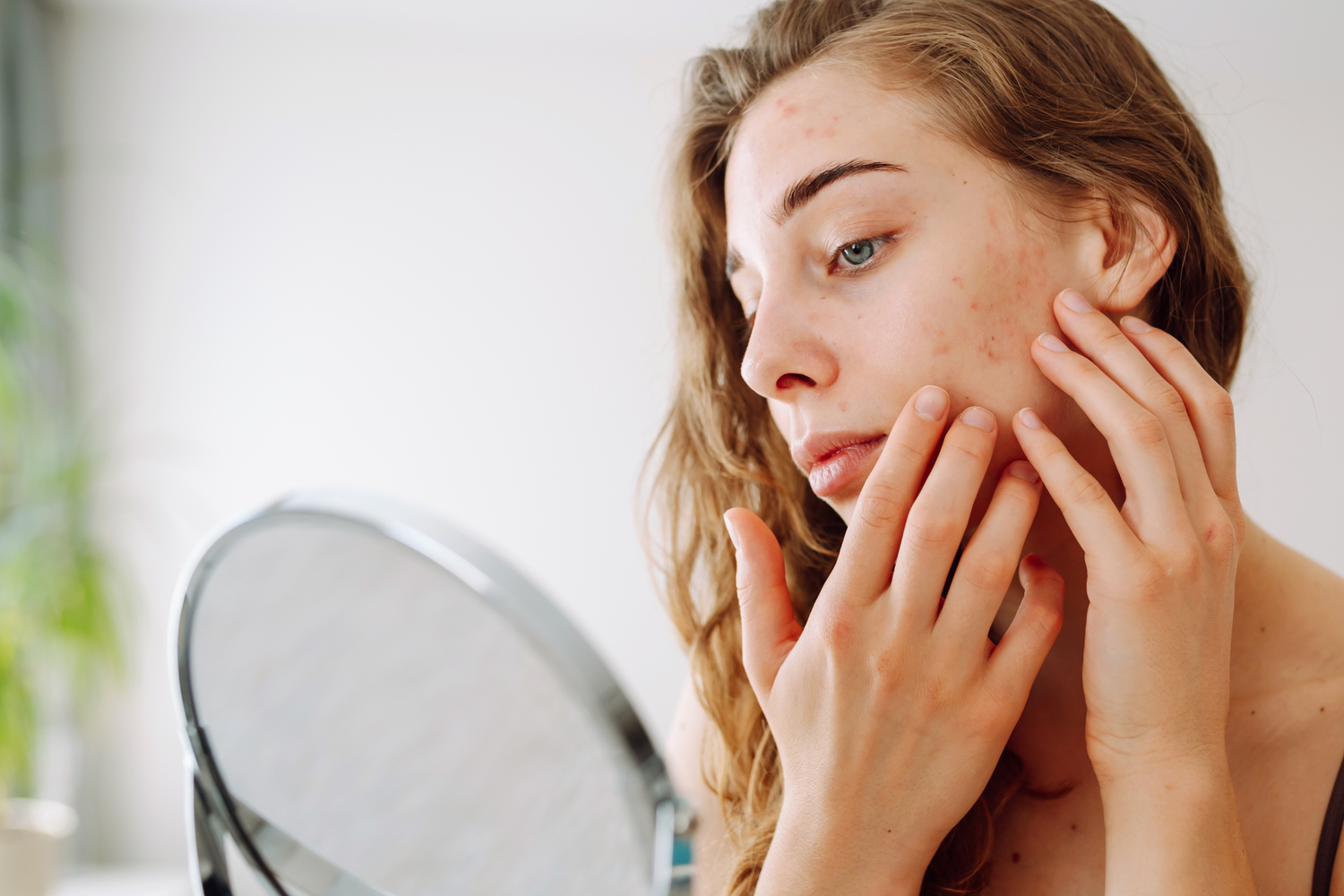
In dermatology, purging refers to a temporary increase in breakouts caused by accelerated skin cell turnover. When certain active ingredients speed up the rate at which your skin sheds dead cells, microcomedones (tiny clogs forming beneath the surface) are brought to the surface faster than they would naturally. The result is a cluster of breakouts that appear in areas where you typically experience congestion.
Purging only occurs with ingredients that accelerate skin cell turnover, causing dead cells to shed faster than usual. These include retinoids, alpha hydroxy acids (AHAs), beta hydroxy acids (BHAs), and benzoyl peroxide. Each of these works by either loosening the bonds between dead skin cells or encouraging faster cell division in the epidermis.
The key characteristic of purging is that it's predictable. It happens in familiar problem areas, resolves within a few weeks as your skin adjusts, and leaves your skin clearer once the process is complete. It's a side effect of how these ingredients fundamentally alter skin cell behavior.
Why Peptides Likely Aren't Causing Your Breakouts
Peptides work through entirely different biological pathways. While some peptides like GHK-Cu do stimulate cell proliferation to support tissue repair and regeneration, this happens at the dermal level where new collagen and structural proteins are being built. They're signaling molecules that encourage repair and barrier support, not surface exfoliants.
Because peptides don't influence the shedding of dead skin cells or microcomedone surfacing, they can't trigger purging in the traditional dermatological sense. Their mechanism of action simply doesn't overlap with the processes that cause purging. When peptides interact with your skin, they're supporting repair and maintenance functions, not stripping away surface layers or forcing clogs to the surface.
So if breakouts appear after you start using a peptide serum, the peptide itself is probably not the cause and the explanation lies elsewhere.
Why Do Some People Break Out After Starting Peptides?
Breakouts that coincide with starting a peptide product are usually tied to formulation issues, application habits, or pre-existing skin conditions rather than the peptide itself. Here are the most common culprits:
Comedogenic Ingredients
Many commercial peptide serums contain heavy occlusives like dimethicone or mineral oil, pore-clogging carrier oils such as coconut derivatives or isopropyl myristate, and thick emulsifiers that can trap debris in pores. These formulation components are often added to improve texture or shelf stability, but they can create congestion, especially for people prone to clogged pores.
Fragrance and Preservatives
Synthetic fragrances and certain preservatives are common hidden irritants in skincare products. They can trigger inflammatory responses that look like breakouts but are actually reactions to irritation. Many people mistakenly attribute these reactions to the active ingredient when the problem lies with inactive components in the formula.
Barrier Disruption
If your skin barrier is already compromised from over-exfoliation, harsh treatments, or environmental damage, it becomes more reactive to new products. Additionally, introducing too many new products at once can overwhelm a healthy barrier and push it into a reactive state. Both scenarios make skin more susceptible to breakouts, but the peptide isn't causing the problem. The barrier instability is.
pH Disruption
Skin functions optimally within a specific pH range. If a peptide serum has a significantly different pH than the rest of your routine, it can temporarily disrupt barrier function and increase sensitivity. This disruption may manifest as congestion or irritation that gets misidentified as purging.
Starting Too Strong
Using a high concentration of peptides or applying them too frequently before assessing your skin's response can make it difficult to identify whether you're reacting to the peptide, the formulation, or another product in your routine. When multiple variables change at once, it becomes nearly impossible to pinpoint the actual source of irritation or breakouts. This can lead you to incorrectly blame the peptide for what's actually a formulation issue or barrier reaction.
The common thread here is that these are formulation and application issues, not peptide issues. When breakouts occur, the peptide is rarely the problem.
How Peptides Can Actually Support Clearer, Calmer Skin
Rather than causing breakouts, peptides often help reduce the conditions that lead to them. Their mechanisms support barrier health, calm inflammation, and reinforce skin's natural resilience over time.
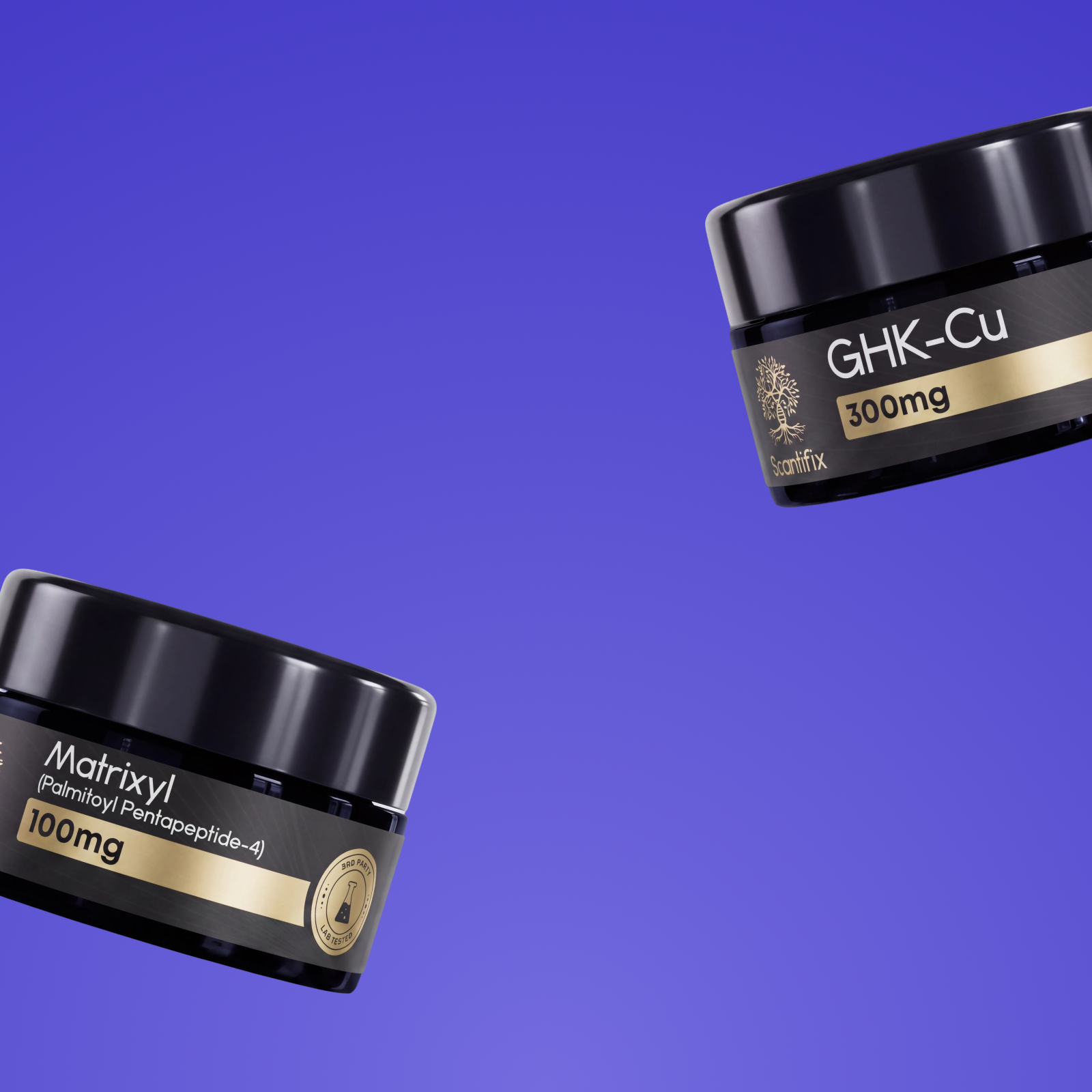
GHK-Cu (Glycyl-L-Histidyl-L-Lysine-Copper,)
GHK-Cu is a carrier peptide that delivers copper ions into the skin to support tissue repair and regeneration. Research shows it helps strengthen the skin barrier, supports collagen synthesis, and provides antioxidant protection that reduces visible redness and oxidative stress (Pickart & Margolina, 2018). A stronger, more resilient barrier is less prone to the inflammation and sensitivity that can trigger breakouts.
Matrixyl (Palmitoyl Pentapeptide-4)
Matrixyl is a signal peptide that encourages the production of collagen and elastin, two structural proteins that maintain skin integrity. Studies show it supports matrix regeneration and tissue remodeling, which helps improve skin's overall resilience to environmental stressors (Schagen, 2017). By reinforcing the extracellular matrix, Matrixyl helps maintain the structural foundation that keeps skin calm and stable. This structural support translates to skin that's less prone to the inflammation and sensitivity that can trigger reactive breakouts.
Zinc Thymulin
Zinc Thymulin is a metallopeptide that modulates immune signaling in skin tissue. Research on its mechanism suggests it helps regulate inflammatory pathways at the cellular level, which may create a more balanced environment that's less likely to overreact to stressors. This immune-modulating effect may support calmer, more resilient skin. Note that Zinc Thymulin should be used at different times than GHK-Cu (morning versus evening, or alternating days) since zinc can interfere with copper's biological activity.
These peptides demonstrate that rather than disrupting skin or causing purging, they work to strengthen barriers and reduce the inflammation that often underlies reactive breakouts.
How to Introduce Peptides Smoothly Into Your Routine
If you're concerned about breakouts when starting peptides, a few strategic practices can help minimize the risk:
One of the most effective ways to avoid formulation-related reactions is to use raw peptides to create custom serums. This approach gives you full control over what touches your skin, eliminating unnecessary fillers, fragrances, and comedogenic carriers that often cause the reactions people mistake for purging. It’s as simple as reconstituting (dissolving) pure, raw peptides into a clean base like hyaluronic acid serum. We created a guide to help anyone just getting started with reconstituting raw peptides. Start with a single peptide to keep things straightforward and make it easier to identify how your skin responds.
If you prefer pre-made formulations, prioritize products with short, transparent ingredient lists where the peptide is the star. Avoid anything with heavy silicones, comedogenic carriers, synthetic scents, or unnecessary stabilizers, especially if you're prone to congestion.
Keep exfoliation minimal while trying new actives. If you're using retinoids, acids, or other exfoliants, scale back temporarily to avoid overwhelming your barrier. Once your skin has adjusted to the peptide, you can gradually reintroduce other actives.
Although peptides are known for being generally well-tolerated, those with sensitive or reactive skin should take extra care. Patch test on a small area of skin for a few days before broader application. This helps you gauge tolerance without risking a widespread reaction.
These practices create the best conditions for your skin to adapt to new signaling activity without unnecessary stress.
Conclusion: Clear Information, Calm Decisions
Peptides don't cause purging. Their biological mechanisms don't involve the cell turnover acceleration or exfoliation processes that trigger traditional purging. If breakouts appear when you start using a peptide product, the most likely explanations involve formulation issues, barrier health, or how the product is being integrated into your routine.
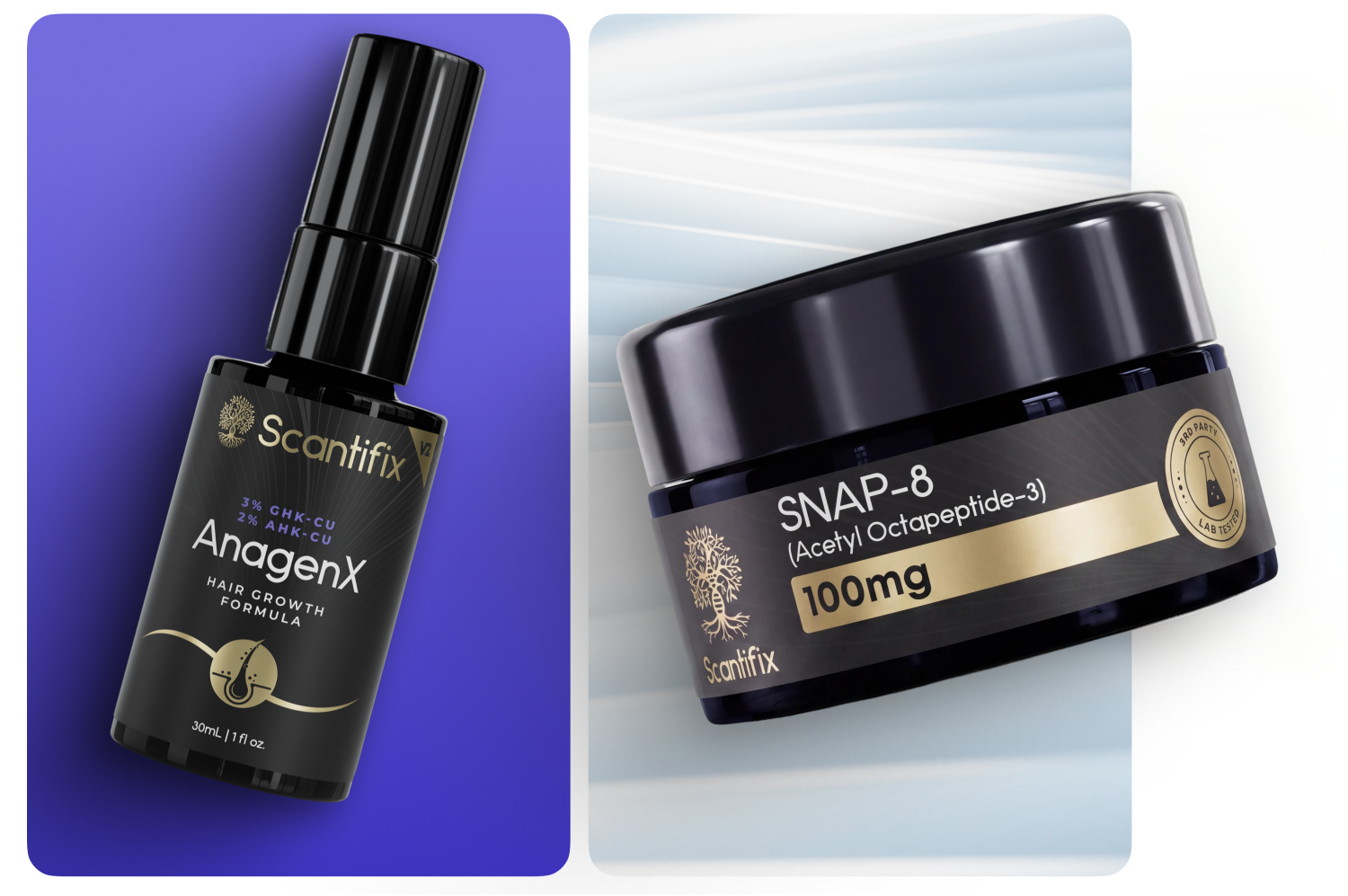
Peptides remain one of the gentlest and most supportive categories of actives for daily skin repair and long-term resilience. When formulations are clean, purity is high, and unnecessary irritants are avoided, most of the reactions mistaken for purging simply don't occur. At Scantifix, our peptides are third-party tested for purity, free from fillers and fragrances, and designed to work with your skin's natural repair systems rather than against them.

References
Schagen, S. K. (2017). Topical peptide treatments with effective anti-aging results. Cosmetics, 4(2), 16. https://doi.org/10.3390/cosmetics4020016
Pickart, L., & Margolina, A. (2018). Regenerative and protective actions of the GHK-Cu peptide in the light of the new gene data. International Journal of Molecular Sciences, 19(7), 1987. https://doi.org/10.3390/ijms19071987


Leave a comment
All comments are moderated before being published.
This site is protected by hCaptcha and the hCaptcha Privacy Policy and Terms of Service apply.