


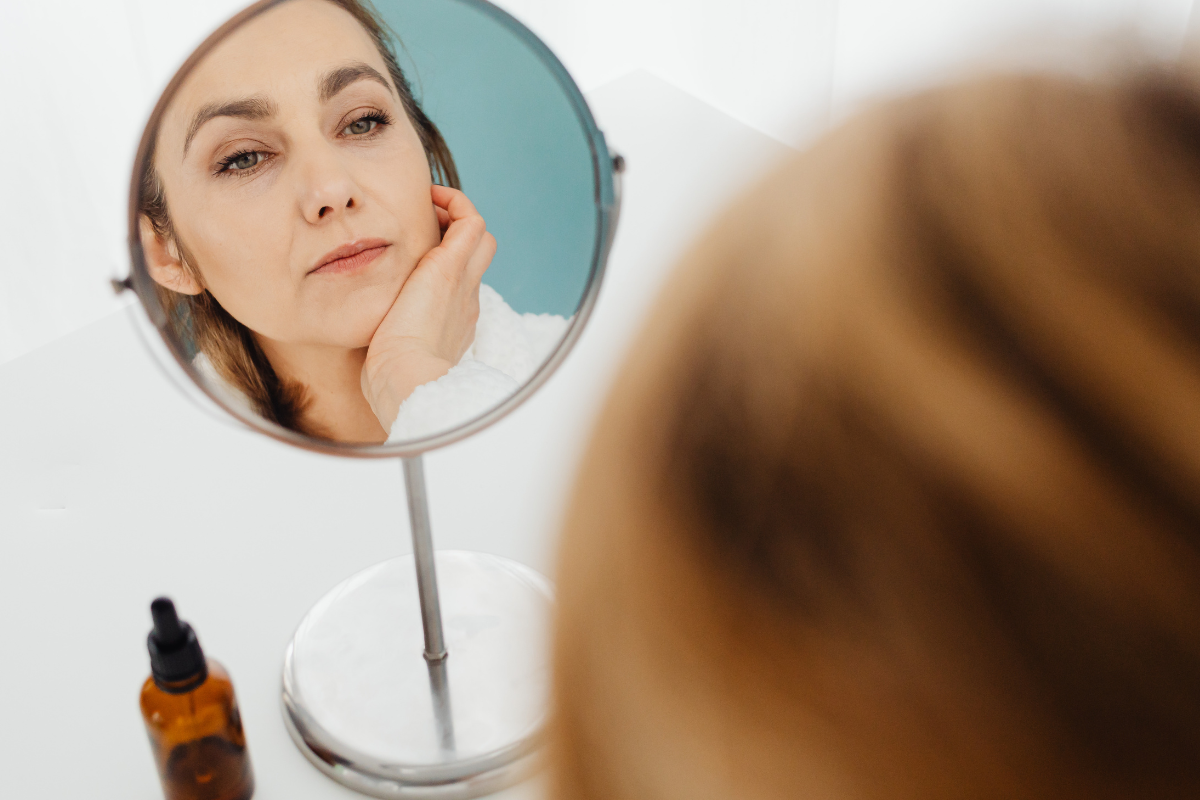
At some point in life, we all start noticing the subtle shifts towards aging in our skin. It might be a small difference in texture. Maybe a loss of firmness or a line that wasn't there before. You probably move on with your day, but sometimes it lingers in your mind a little. It can be different for everyone. Some may feel self-conscious. Others might feel dread. You might start researching anti-aging skincare routines immediately.
We’re here to tell you that these feelings aren’t necessarily vanity. In fact, research shows that how our skin looks and feels has a real psychological dimension that can affect confidence, self-perception, and how comfortable we feel in social situations. It's not universal or inevitable, but it's common enough that scientists have been studying it for decades.
We think the emotional side of skin aging deserves a more honest conversation than it usually gets. Let’s take a look at what the research says.
Why Skin Is So Closely Tied to How We See Ourselves
Human beings are remarkably quick at reading faces.
Within seconds, we form impressions about age, health, and energy levels. Subtle cues in the skin, including tone, texture, and elasticity, play a significant role in how those impressions form (Montepare & Zebrowitz, 1998).
So when skin begins to change over time, we register it visually, yes. But it can feel highly personal too. For some people it touches on identity, on how they see themselves and how they feel seen by others.
In environments where youthful appearance is often emphasized, whether in media, professional settings, or social spaces, these changes can carry additional weight. Not because they inherently should, but because of the cultural context most of us are navigating (Halliwell & Dittmar, 2005).
What's Happening Beneath the Surface
While the emotional experience is nuanced, the biology of skin aging is relatively well understood.
Over time, the skin's internal support system changes in two distinct ways. Some of it is natural biological change. Collagen production slows, elastin becomes less resilient, and cell turnover gradually becomes less efficient. These are processes that happen to everyone, shaped largely by genetics and time.
But some of it is damage, particularly from sun exposure and environmental stressors. UV radiation breaks down collagen, causes oxidative stress, and accumulates cellular damage over years. This part isn't inevitable in the same way, and tends to vary considerably from person to person depending on lifestyle and environment.
What Research Suggests About the Emotional Side of Skin Aging
There's a field of research called psychodermatology that looks specifically at the relationship between skin and psychological well-being. While much of this work focuses on clinical skin conditions, its findings are broadly relevant: changes in skin appearance can influence how people feel about themselves and how they move through the world.
Clinical research has shown that skin-related concerns can affect quality of life in ways that extend beyond the physical, touching on confidence, social ease, and emotional comfort (Finlay & Khan, 1994). Related work suggests that appearance-based changes may increase self-awareness or shift how you perceive yourself in social contexts (Gupta & Gupta, 1996; Ginsburg, 1996).
Part of why this relationship exists comes down to biology. Research into what's sometimes called the brain-skin axis suggests that the connection runs in both directions: psychological stress can influence skin function, and changes in the skin can affect how you feel (Chen & Lyga, 2014). The skin is part of a larger system, one that connects outward appearance to internal experience in ways that are still being mapped.
It's Not the Same for Everyone
We would be ignoring the science if we didn't mention that the emotional impact of skin aging varies considerably from person to person. For some, the changes are genuinely unsettling. For others, the experience is quite different.
Many women report greater confidence, stronger self-identity, and less reliance on appearance as they get older. Research on body image across the lifespan suggests that self-perception can become more stable and resilient with age (Tiggemann, 2004). Other studies point to a broader shift where appearance becomes just one part of a much richer sense of self (Chrisler & Ghiz, 1993).
Biology is a factor, but someone’s experience is also shaped by personality, life experience, and cultural context. And it's worth saying that choosing to engage with skin health, whether through a casual routine or more a targeted anti-aging approach, doesn't necessarily come from a place of psychological distress.
Why People Start Paying Closer Attention to Their Skin
There's no single reason someone decides to engage more actively with their aging skin. For some it's practical, a response to changes they've noticed and want to understand better. For others it's part of a broader approach to aging well, the same way they might pay more attention to sleep, diet, or fitness as they get older. Some people find the science behind skin aging genuinely interesting. Others simply want to feel their best and see anti-aging skincare as a straightforward way to support that.
Research exploring aging and identity points to another motivation that's perhaps harder to articulate. The way we care for our appearance is often connected to how we navigate self-expression and a sense of continuity over time (Clarke & Griffin, 2008). Skin changes, however subtle, can prompt a desire to stay aligned with how you feel on the inside. Not to freeze time or reverse anything, but to maintain a thread of recognition between who you've always been and how you present to the world.
A way of saying: this is still me.
A More Thoughtful Way to Look at Skin Aging
Skin aging is a natural biological process. But the way we experience it is layered, shaped by who we are and the world we live in. The research shows that the emotional side of skin aging is legitimate, varied, and deeply human. It’s not vanity. At least not always. It’s more likely a desire to feel like yourself and stay connected to your own sense of who you are.
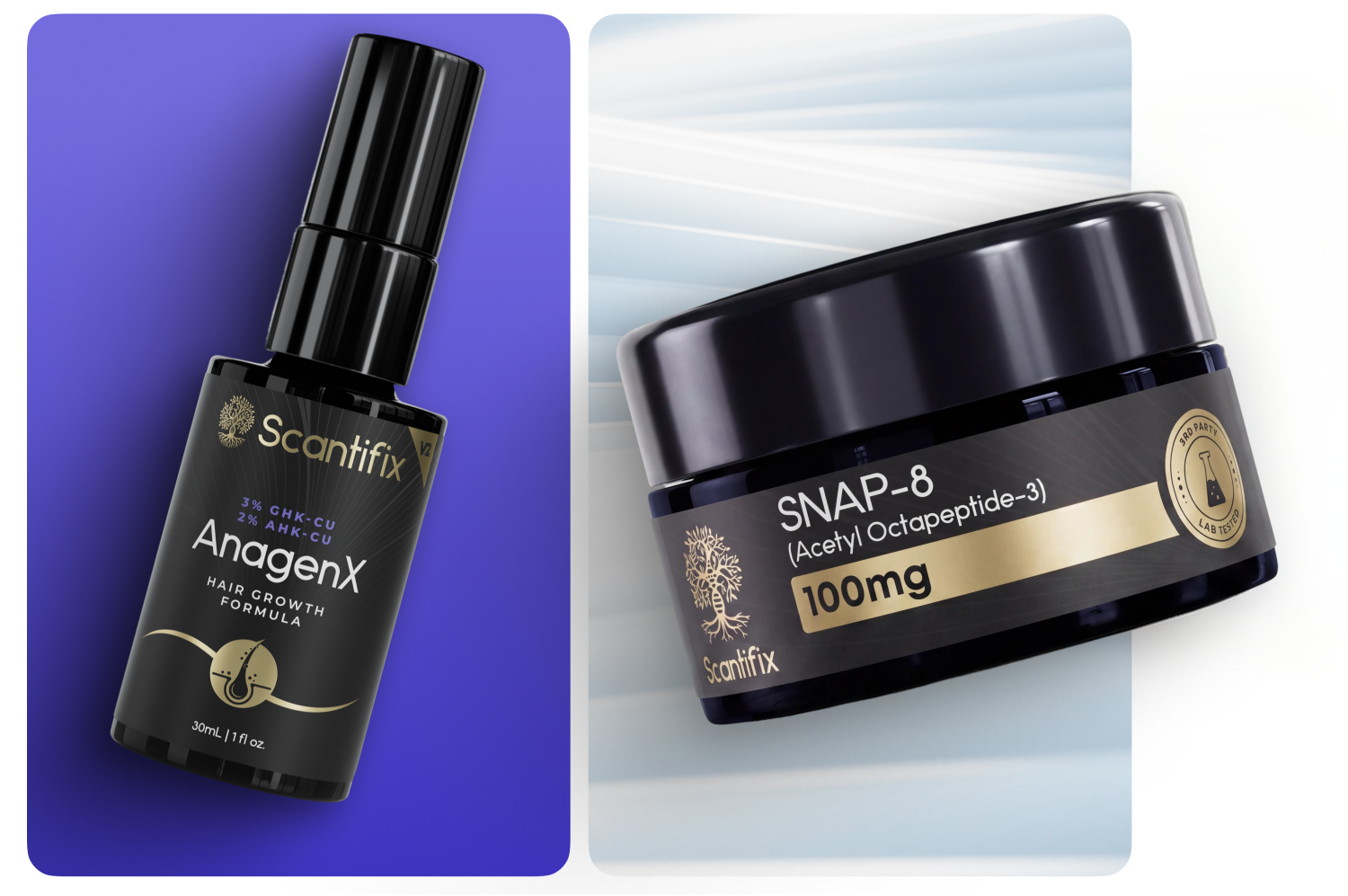
That’s part of why Scantifix exists. We started with a straightforward belief: that people deserve access to the science of skin care that's clean, transparent, and built to perform. Ultimately, so that you can achieve the results that make you feel good in your own skin.

References
Chen, Y., & Lyga, J. (2014). Brain-skin connection: Stress, inflammation and skin aging. Inflammation & Allergy - Drug Targets, 13(3), 177–190. https://doi.org/10.2174/1871528113666140522104422
Chrisler, J. C., & Ghiz, L. (1993). Body image issues of older women. Women & Therapy, 14(1), 67–75. https://doi.org/10.1300/J015v14n01_07
Clarke, L. H., & Griffin, M. (2008). Visible and invisible ageing: Beauty work as a response to ageism. Ageing & Society, 28(5), 653–674. https://doi.org/10.1017/S0144686X07007003
Finlay, A. Y., & Khan, G. K. (1994). Dermatology Life Quality Index (DLQI)--a simple practical measure for routine clinical use. Clinical and experimental dermatology, 19(3), 210–216. https://doi.org/10.1111/j.1365-2230.1994.tb01167.x
Ginsburg I. H. (1996). The psychosocial impact of skin disease. An overview. Dermatologic clinics, 14(3), 473–484. https://doi.org/10.1016/s0733-8635(05)70375-2
Gupta, M. A., & Gupta, A. K. (1996). Psychodermatology: an update. Journal of the American Academy of Dermatology, 34(6), 1030–1046. https://doi.org/10.1016/s0190-9622(96)90284-4
Halliwell, E., & Dittmar, H. (2005). The role of self-improvement and self-evaluation motives in social comparisons with idealised female bodies in the media. Body Image, 2(3), 249–261. https://doi.org/10.1016/j.bodyim.2005.05.001
Montepare, J. M., & Zebrowitz, L. A. (1998). Person perception comes of age: The salience and significance of age in social judgments. In M. P. Zanna (Ed.), Advances in Experimental Social Psychology (Vol. 30, pp. 93–161). Academic Press. https://doi.org/10.1016/S0065-2601(08)60383-4
Tiggemann M. (2004). Body image across the adult life span: stability and change. Body image, 1(1), 29–41. https://doi.org/10.1016/S1740-1445(03)00002-0

Leave a comment
All comments are moderated before being published.
This site is protected by hCaptcha and the hCaptcha Privacy Policy and Terms of Service apply.