


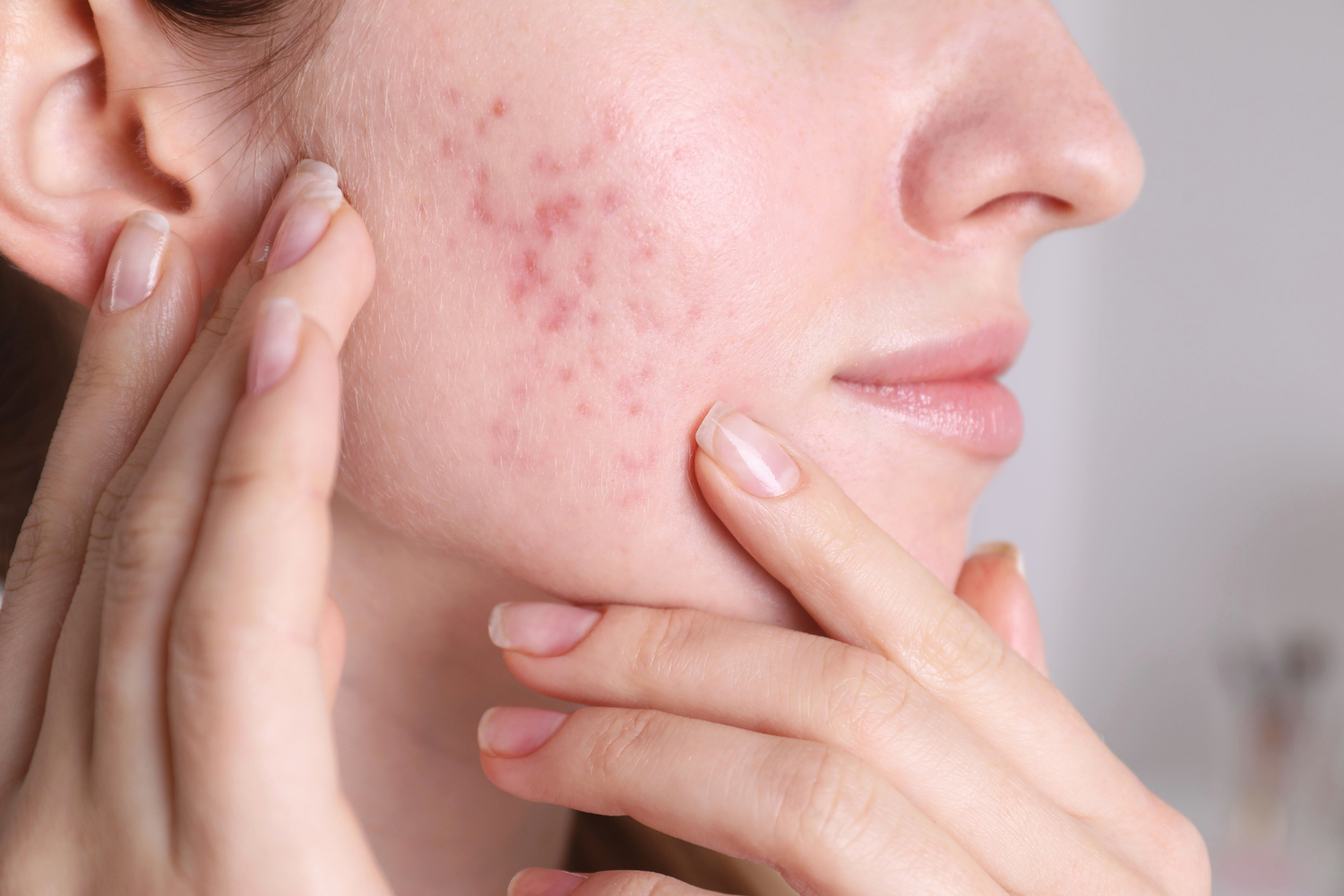
After acne clears, the skin begins its own recovery process. For some, this means temporary redness or pigmentation that fades gradually. For others, it leaves behind textural changes like small indentations or uneven areas that take longer to smooth out.
Both types of post-acne changes can improve when the skin’s natural repair systems are supported. By promoting collagen renewal, calming residual inflammation, and reinforcing the skin’s structure, you can help it rebuild more effectively.
This guide explains what causes these different forms of post-acne change and explores science-backed ways to support natural repair for smoother, healthier-looking skin.
Two Types of Post-Acne Changes
Not all marks left by acne are the same. Understanding what you're dealing with helps you choose the best approach for your skin's needs.
Post-Inflammatory Discoloration
When acne triggers inflammation, the skin responds with increased blood flow and pigment production. After the breakout heals, this leaves behind color changes, not structural damage.
-
- Post-inflammatory erythema (PIE): Red or purple marks caused by dilated blood vessels and residual inflammation
- Post-inflammatory hyperpigmentation (PIH): Brown or tan marks from excess melanin production triggered by the inflammatory response
These marks are temporary. The skin surface remains smooth, with no indentation or raised area. They fade naturally as circulation normalizes and pigment is metabolized, though this can take months or years without intervention.
Atrophic Scarring
When inflammation reaches deep into the dermis and damages the skin's structural foundation, the healing process sometimes produces too little collagen. This creates permanent textural changes with actual indentations you can see and feel.
These are atrophic scars. Unlike marks, they don't fade on their own because the skin has lost structural volume. Improving them requires stimulating new collagen formation deep enough to rebuild what was lost.
Most people dealing with post-acne issues have both marks and some degree of textural change. The approaches that help one often support the other.
What Influences Healing and Repair?
Your skin's ability to fade marks and rebuild texture depends on what's happening beneath the surface:
Collagen Production and Organization
The skin constantly produces new collagen and breaks down old collagen as part of its natural turnover. In areas affected by acne, this process may be disrupted by either producing too little new collagen or organizing it poorly, causing atrophic scars or uneven texture.
Treatments that stimulate fibroblasts and support organized collagen synthesis help the skin rebuild its structure more effectively.
Inflammation Resolution
Once breakouts stop, low-grade inflammation can still hang around for months. This keeps marks looking red or irritated and slows the skin's ability to complete its repair work.
Reducing residual inflammation allows the skin to transition from reactive mode to rebuilding mode.
Barrier Integrity
Repeated inflammation weakens the skin's protective barrier, leaving it more vulnerable to dehydration, irritation, and slower healing. A compromised barrier also makes post-inflammatory marks more persistent.
Restoring barrier function helps the skin allocate resources toward repair instead of defense.
Circulation and Cellular Energy
Healing requires oxygen, nutrients, and cellular energy. Poor circulation or sluggish cellular metabolism slows every aspect of repair, from collagen synthesis to the clearance of excess pigment.
Treatments that enhance blood flow and cellular energy production give the skin more resources to work with.
Three Approaches That Support Skin Repair
At-Home Microneedling: Controlled Collagen Stimulation
Microneedling uses fine needles to create controlled microchannels in the skin. This mechanical stimulation triggers the body's repair response, activating fibroblasts to produce new collagen and elastin.
Research shows that microneedling can improve the appearance of atrophic acne scars across multiple treatment sessions (Sitohang et al., 2021). The depth of needle penetration determines what the treatment can address:
Nanoneedling (0.25-0.5mm) Works at the surface level, staying within the epidermis. It creates temporary channels that help peptides and other active ingredients absorb better while supporting gentle renewal. Best for fading post-inflammatory marks, smoothing fine texture, and maintaining results between deeper treatments.
Microneedling (0.5-2.5mm) Penetrates into the dermis where structural repair actually happens. Research shows that depths of 1.5-2.5mm work best for atrophic acne scars, with one study finding 2.5mm significantly more effective than 1.5mm (El-Domyati et al., 2024).
At these depths, microneedling:
-
- Breaks down fibrous scar tissue in depressed areas
- Stimulates substantial new collagen formation
- Improves skin thickness in areas where collagen was lost
- Encourages organized remodeling rather than disorganized scar tissue
- Promotes barrier renewal by supporting new cell formation and restoring surface integrity
Clinical studies report that most people see noticeable improvements after a series of treatments, typically spaced 4-6 weeks apart (Sitohang et al., 2021). The process is gradual, with new collagen taking months to fully mature and organize.
Enhanced Product Absorption
Beyond collagen stimulation, the microchannels created by needling allow active ingredients to penetrate deeper than they would through intact skin. Research shows this can increase absorption of topical compounds by allowing direct pathways through the stratum corneum (Singh & Yadav, 2016).
This makes microneedling an effective complement to peptide serums, which work best when they can reach the dermal layers where collagen synthesis occurs.
Topical Peptides: Signaling Structural Renewal
Peptides are short amino acid chains that function as cellular messengers. When specific peptides are applied to skin, they signal cells to perform repair functions like producing collagen, organizing tissue structure, and reinforcing the skin’s barrier.
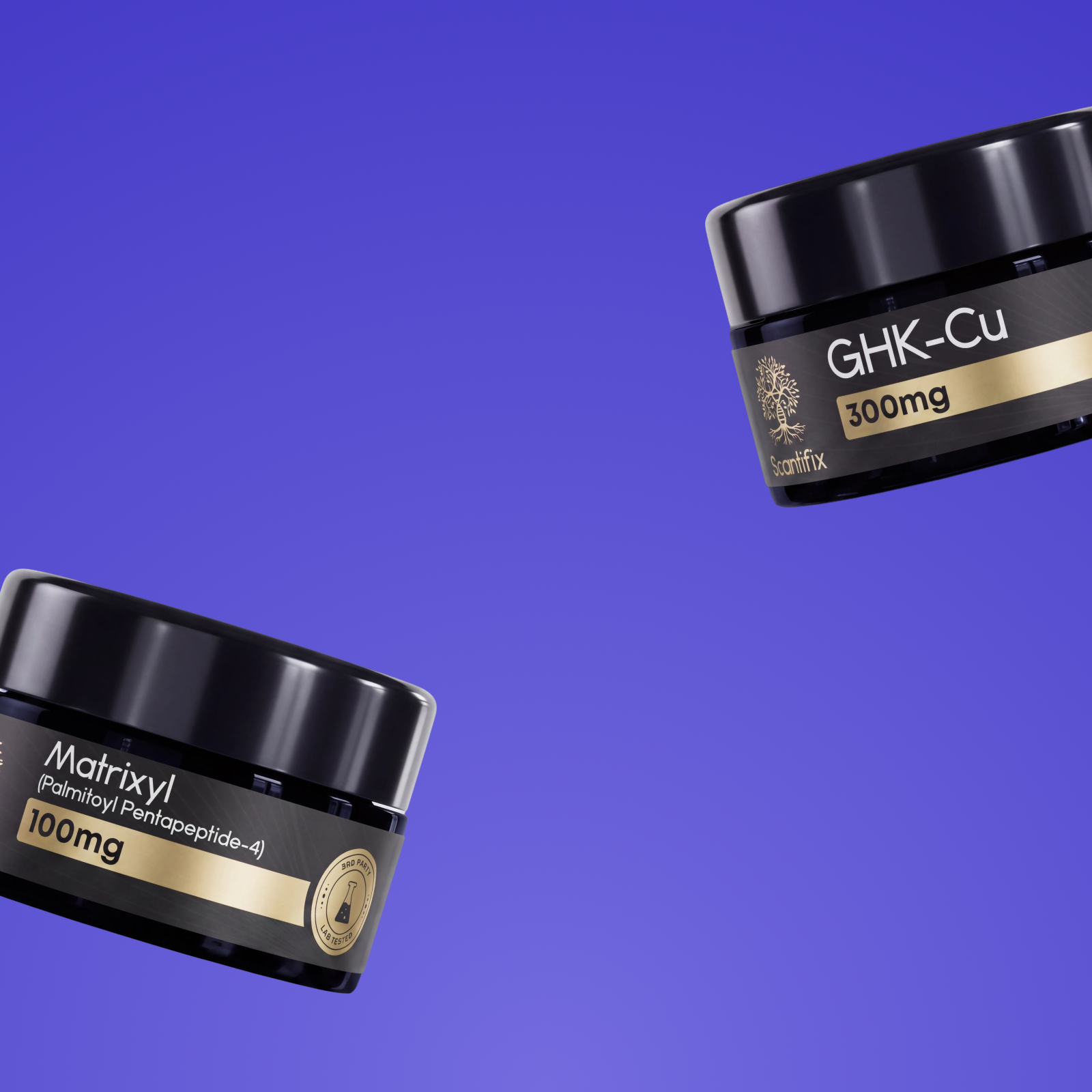
GHK-Cu (Copper Peptide)
This copper-binding peptide has extensive research supporting its role in wound healing and tissue remodeling. Studies show GHK-Cu:
- Stimulates fibroblast activity and increases production of collagen types I and III
- Modulates matrix metalloproteinases (MMPs) that break down and remodel tissue
- Supports organized collagen deposition during healing
- May help reduce post-inflammatory discoloration by supporting efficient tissue resolution
(Pickart & Margolina, 2018)
One study directly comparing microneedling alone versus microneedling with copper peptide found that the combination showed enhanced improvements in acne scars (Vignesh et al., 2025). The peptide works synergistically with the mechanical stimulation to support more effective collagen remodeling.
Matrixyl (Palmitoyl Pentapeptide-4)
Matrixyl signals fibroblasts to increase collagen and elastin synthesis. Research indicates it can gradually improve skin thickness and structural integrity (Robinson et al., 2005), particularly relevant for areas where atrophic scarring has reduced the skin's foundation.
Regular application supports the ongoing process of collagen turnover, helping the skin rebuild volume and smoothness over time.
Syn-Coll (Palmitoyl Tripeptide-5)
Syn-Coll both stimulates collagen production and inhibits the enzymes that break down existing collagen. The result is increased structural protein levels, which translates to improved skin resilience and reduced visibility of textural irregularities.
GHK-Biotin
By combining copper peptide's regenerative properties with biotin's role in cellular metabolism, GHK-Biotin supports both barrier recovery and sustained structural repair. It helps maintain the cellular energy needed for efficient healing.
Peptides work gradually. Visible improvements in texture and marks typically emerge after 2-3 months of consistent use as the skin completes multiple renewal cycles with enhanced support.
Red Light Therapy: Energizing Cellular Repair
Red and near-infrared light therapy (630-850nm wavelengths) penetrates into the dermis and increases cellular energy production by stimulating mitochondrial activity.
Research shows that red light therapy:
- Stimulates collagen production in skin fibroblasts
- Reduces inflammation in skin tissue
- Improves blood circulation, delivering oxygen and nutrients to healing areas
- Enhances cellular repair processes
(Wunsch & Matuschka, 2014)
For areas affected by post-acne changes, these effects may help address both textural concerns and persistent discoloration. The increased ATP production gives skin cells more resources for repair, while sustained collagen stimulation may contribute to gradual improvements in texture. Anti-inflammatory properties support the resolution of redness, and improved circulation aids in the natural clearance of excess pigment.
Red light therapy works best when used 3-5 times per week, allowing the cumulative effects on cellular function to build over time. When combined with microneedling and peptides, it complements the skin's repair response and supports more comprehensive results.
Building an Effective Repair Routine
Consistency and patience are key to visible improvement. The skin repairs itself gradually, and each phase of care plays a different role in that process.
Core Treatments: Stimulating Collagen Renewal
Microneedling is the foundation of structural repair. Use deeper settings (0.5–2.5 mm depending on scar depth and skin tolerance) every 1-3 weeks to encourage collagen remodeling. Begin with moderate depths and increase gradually as your skin adapts. Always allow complete recovery between sessions before starting another cycle.
For gentler surface renewal, nanoneedling (0.25–0.5 mm) can be done weekly between collagen-stimulating sessions. It enhances product absorption and keeps cell turnover steady. It’s recommended to wait 4-7 days after any needling session before exfoliating to avoid irritation.
Daily Support: Strengthening and Protecting
Peptide serums morning and evening help sustain collagen signaling and support ongoing tissue repair. Follow with a hydrating, barrier-supportive moisturizer to maintain resilience. Each morning, use a mineral-based SPF with broad-spectrum coverage to prevent new pigmentation and protect healing skin from environmental stress.
Ongoing Enhancement: Energy and Recovery
Red light therapy 3-5 times per week helps boost cellular energy and reinforces collagen production. Regular timing helps maintain its cumulative benefits and supports long-term recovery.
Progress often happens gradually. Some weeks bring visible change, others feel static. Both are part of the natural repair cycle. Track your skin with photos taken in consistent lighting every few months to appreciate the progress that’s harder to see day to day.
The Scantifix Difference
We firmly believe that quality and purity directly impact results. Every peptide is of the highest purity, verified through third-party testing, and supported by transparent Certificates of Analysis.. Our peptides are in their raw form and not diluted by unnecessary ingredients or fillers, so you know exactly what you’re putting on your skin
The same standard applies to our technology. Our at-home devices are engineered for safety, consistency, and professional-level performance, making advanced treatments more accessible while maintaining the precision your skin deserves.
When purity, precision, and science guide every step, your skincare routine becomes more reliable and results more visible. Your skin is capable of remarkable repair when given the right support. At Scantifix, we create products that make that possible, built on research, tested for purity, and designed to work in harmony with your skin’s natural processes.
Final Thoughts: A Smarter Approach to Post-Acne Repair
Post-acne marks and scars don’t have to define your skin. With the right combination of repair-focused treatments and science-backed care, it’s possible to achieve smoother texture, even tone, and stronger structure over time.
By choosing gentle, biology-led methods like at-home microneedling, topical peptides, and red light therapy, you’re helping the skin rebuild using its own natural repair processes. The result is visible change that is more natural, balanced, and enduring.

Resources:
El-Domyati, M., Barakat, M., Abdel-Wahab, H., Medhat, W., Elfaham, T., Anwer, M., & Ibrahim, W. (2024). Evaluation of microneedling depth of penetration in management of atrophic acne scars: A split-face comparative study. International Journal of Dermatology, 63(4), 550-556. https://doi.org/10.1111/ijd.17006
Pickart, L., & Margolina, A. (2018). Regenerative and protective actions of the GHK-Cu peptide in the light of the new gene data. International Journal of Molecular Sciences, 19(7), 1987. https://doi.org/10.3390/ijms19071987
Robinson, L. R., Fitzgerald, N. C., Doughty, D. G., Dawes, N. C., Berge, C. A., & Bissett, D. L. (2005). Topical palmitoyl pentapeptide provides improvement in photoaged human facial skin. International Journal of Cosmetic Science, 27(3), 155-160. https://doi.org/10.1111/j.1467-2494.2005.00261.x
Singh, A., & Yadav, S. (2016). Microneedling: Advances and widening horizons. Indian Dermatology Online Journal, 7(4), 244-254. https://doi.org/10.4103/2229-5178.185468
Sitohang, I. B., Wanitphakdeedecha, R., & Nguyen, H. V. (2021). Microneedling in the treatment of atrophic scars: A systematic review of randomised controlled trials. International Wound Journal, 18(4), 439-448. https://doi.org/10.1111/iwj.13559
Vignesh, N. R., Balakumaran, C., Kumar, N. A., Sukanya, G., Megalai, A. S., & Sowbaghya, P. T. (2025). A study comparing the effect of dermaroller versus dermaroller with copper peptide in the management of acne scars. Journal of Cutaneous and Aesthetic Surgery. https://doi.org/10.25259/JCAS_56_2025
Wunsch, A., & Matuschka, K. (2014). A controlled trial to determine the efficacy of red and near-infrared light treatment in patient satisfaction, reduction of fine lines, wrinkles, skin roughness, and intradermal collagen density increase. Photomedicine and Laser Surgery, 32(2), 93-100. https://doi.org/10.1089/pho.2013.3616


Leave a comment
All comments are moderated before being published.
This site is protected by hCaptcha and the hCaptcha Privacy Policy and Terms of Service apply.