


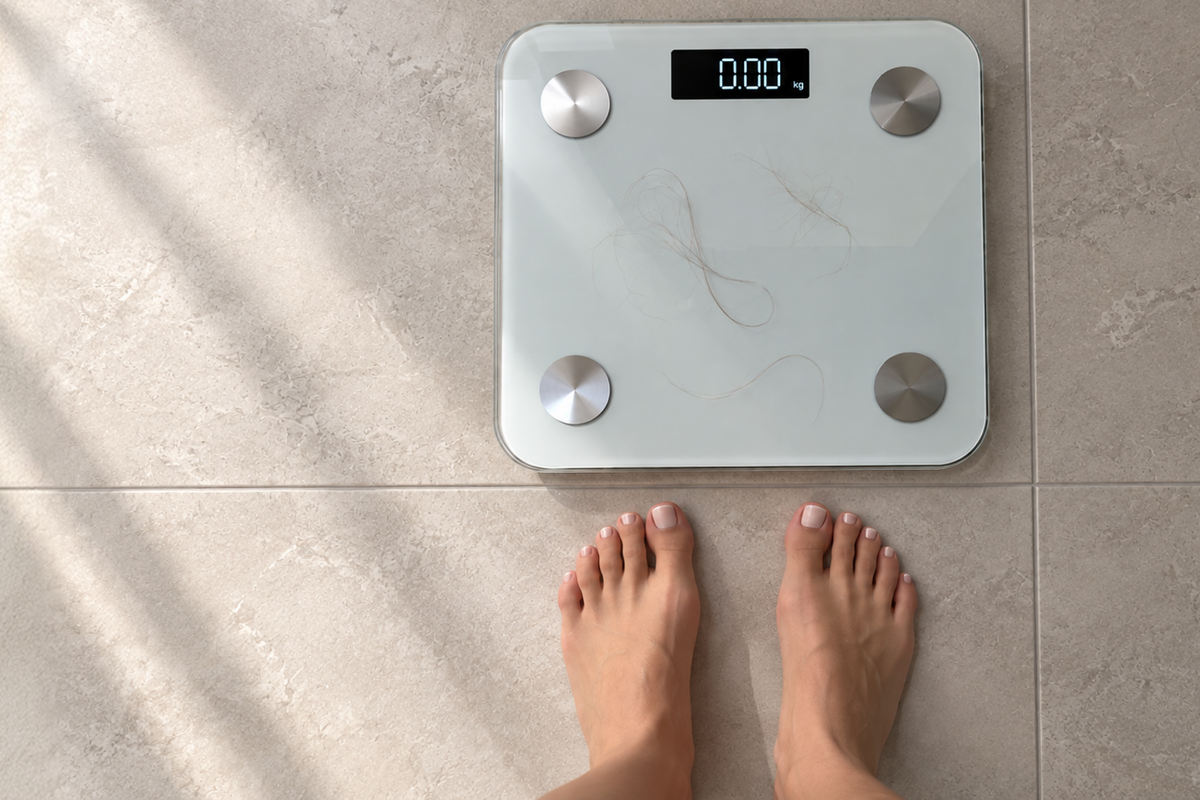
Weight loss can bring changes you expect.
More hair in the shower usually isn’t one of them.
Yet increased shedding can sometimes appear weeks or even months after significant or rapid weight loss. The delay can make the connection surprisingly difficult to recognize.
So, what does losing weight have to do with your hair?
What Is Telogen Effluvium
Sudden, diffuse hair shedding following a major change in the body is often associated with a condition called telogen effluvium.
Unlike pattern hair loss, which involves progressive changes to susceptible follicles over time, telogen effluvium occurs when a larger-than-usual proportion of hair follicles shift from active growth toward the resting stage of the hair cycle. Those hairs are eventually released, leading to increased shedding across the scalp rather than hair loss concentrated in one specific area.
Telogen effluvium is considered a non-scarring form of hair loss, meaning the follicles themselves are generally not destroyed. It has been associated with a wide range of physiological stressors, including illness, surgery, childbirth, significant emotional stress, and sudden weight loss (Oong et al., 2021).
This distinction matters. Seeing significantly more hair in the shower can understandably feel as though the follicles are being permanently lost. With telogen effluvium, however, the problem is generally a disruption in normal hair cycling rather than destruction of the follicle itself.
Why Can Rapid Weight Loss Trigger Hair Shedding?
Hair follicles are remarkably active structures.
Producing a new hair shaft requires continuous cellular activity, protein synthesis, energy, and nutrients. This makes normal hair growth sensitive to significant changes elsewhere in the body.
Rapid weight loss can create several of those changes at once.
A substantial calorie deficit reduces the amount of energy entering the body. Food intake may change considerably, potentially affecting protein and micronutrient intake. Losing a significant amount of weight over a relatively short period can also act as a physiological stressor.
Research on telogen effluvium has long recognized sudden weight loss and caloric restriction as potential triggers (Oong et al., 2021). Nutritional research has similarly linked acute telogen effluvium with sudden weight loss and reduced protein intake (Guo & Katta, 2017).
Importantly, this does not mean that losing weight inevitably causes hair shedding.
The rate and magnitude of weight loss, nutritional intake, existing nutrient status, overall health, and individual susceptibility can all influence how the body responds.
Is It the Weight Loss or What Happens During Weight Loss
Probably one of the most useful ways to understand weight-loss-related shedding is to stop thinking about body weight alone.
The number on the scale is only one part of what is changing.
Energy intake
Significant caloric restriction has been associated with telogen effluvium. Hair production requires energy, and prolonged or severe restriction may influence normal follicle cycling.
Protein
Hair shafts are composed primarily of keratin, a structural protein. Inadequate protein intake can affect hair growth, and reduced protein intake has been identified as one nutritional factor associated with acute telogen effluvium.
Iron and other micronutrients
Iron, zinc, vitamin D, and other micronutrients have all been investigated in relation to hair growth and hair loss. However, the evidence varies considerably between nutrients, and more is not necessarily better.
For example, the relationship between iron stores and telogen effluvium remains debated, while true zinc deficiency can contribute to hair loss. Biotin deficiency can also affect hair, but genuine biotin deficiency is considered uncommon.
This is why indiscriminately adding hair supplements isn’t necessarily the answer. If a nutritional deficiency is suspected, identifying and addressing the actual deficiency is more meaningful than simply taking larger amounts of every nutrient associated with hair.
What About GLP-1 Medications and Hair Loss
The growing use of GLP-1 receptor agonists for weight management has brought new attention to the relationship between weight loss and hair shedding.
Hair loss has been reported among some people using GLP-1-based therapies, but determining exactly why it occurs is more complicated than simply concluding that these medications directly cause hair loss.
A 2026 review identified rapid weight loss leading to telogen effluvium as a leading proposed explanation. Reduced food intake and potential nutritional inadequacies may also contribute. At present, a direct effect of GLP-1 receptor agonists on human hair follicles has not been established (Piraccini et al., 2026).
A recent systematic review similarly describes several possible mechanisms and emphasizes that the relationship is still being investigated.
In other words, there is an important difference between experiencing hair shedding while taking a medication that produces substantial weight loss and demonstrating that the medication itself is directly damaging hair follicles.
As research develops, that distinction will become clearer.
Does Hair Grow Back After Weight-Loss Shedding?
The encouraging feature of acute telogen effluvium is that it is generally considered a temporary, non-scarring form of hair loss with a high rate of remission (Oong et al., 2021).
But temporary doesn't necessarily mean quick.
Once the underlying trigger has been resolved, follicles still have to progress through their normal biological cycle before visible density can recover. That process takes time.
It is also important not to automatically assume that every case of shedding after weight loss is telogen effluvium. Pattern hair loss, thyroid disorders, nutritional deficiencies, autoimmune conditions, medications, and other factors can contribute to hair loss, and more than one cause can exist at the same time.
Persistent, severe, patchy, or otherwise unexplained hair loss is therefore worth discussing with a qualified healthcare professional.
Supporting Hair During and After Weight Loss
If rapid weight loss or inadequate nutrition is contributing to shedding, addressing the underlying trigger comes first.
A topical serum cannot correct inadequate protein intake. A red-light device cannot restore an iron deficiency. And neither can compensate for a diet that consistently fails to provide enough energy or essential nutrients.
Supporting normal hair growth during weight loss therefore begins with the fundamentals: adequate nutrition, sufficient protein, avoiding unnecessarily extreme restriction, and investigating potential deficiencies when appropriate.
Topical and device-based hair care serves a different purpose.
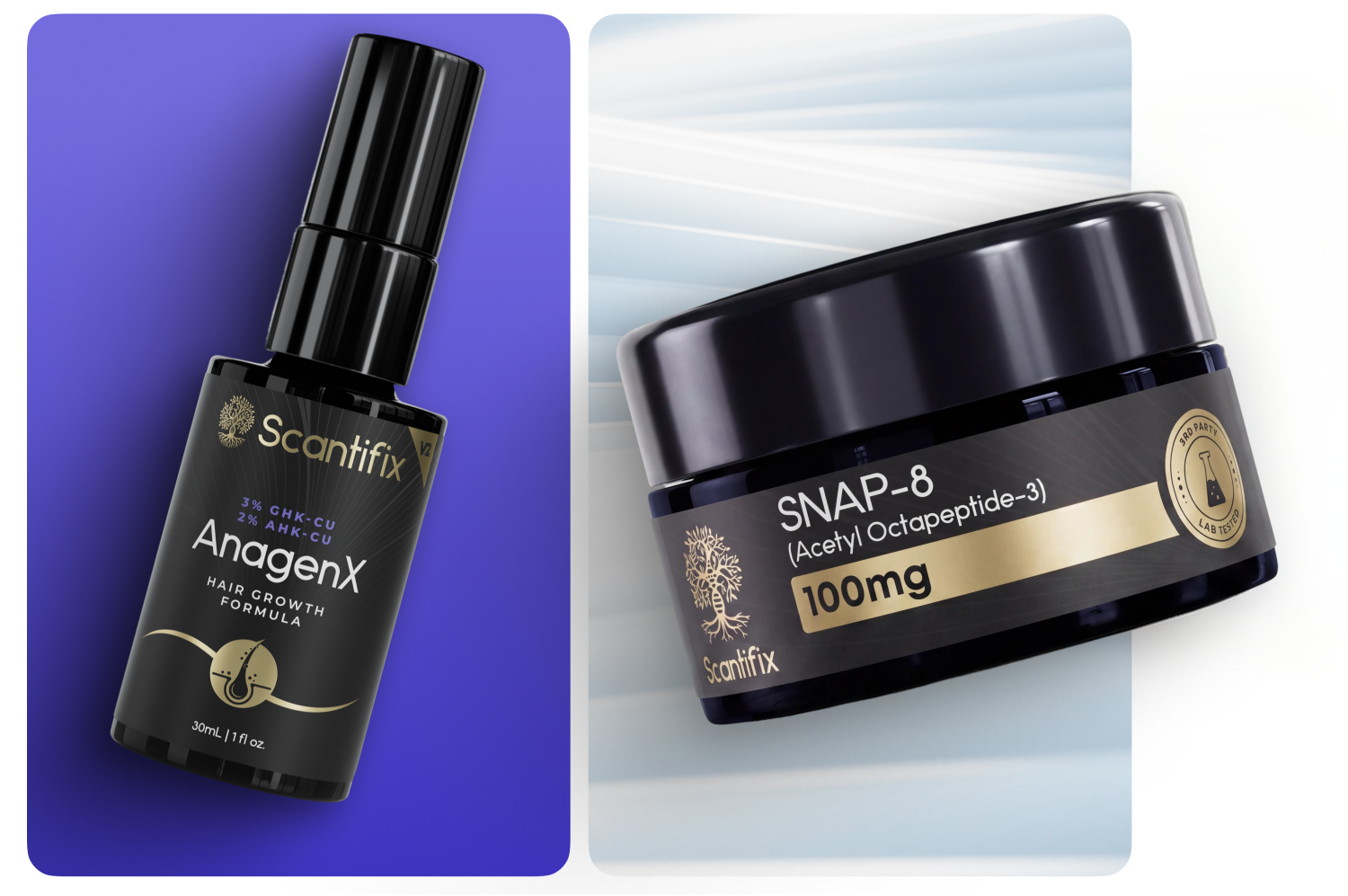
AnagenX provides topical scalp and follicle support through a multi-peptide formulation designed to support several aspects of the environment surrounding healthy hair growth. Rather than correcting the systemic trigger behind telogen effluvium, it can form part of a consistent scalp-care routine while follicles progress through their normal cycle.
Dome Beamer takes a different approach, using red-light photobiomodulation to deliver low-level light to the scalp. Clinical research on low-level light therapy has reported improvements in hair density in people with androgenetic alopecia, including studies of home-use helmet-style devices.
Final Thoughts
When hair starts shedding months after weight loss, it can feel as though something has suddenly gone wrong.
In reality, the story may have started much earlier.
Rapid weight loss, substantial calorie restriction, inadequate protein or micronutrient intake, and physiological stress can all influence normal hair cycling. Because the follicle responds on its own biological schedule, the visible shedding may not appear until long after the original trigger.
Understanding that delay puts sudden shedding into better context.
And it reinforces something easy to overlook: supporting healthy hair isn't only about what goes on your scalp. It's also about giving your body the energy and nutrients it needs to support normal growth.
References
Asghar, F., et al. (2020). Telogen Effluvium: A Review of the Literature. Cureus, 12(5), e8320. https://pmc.ncbi.nlm.nih.gov/articles/PMC7320655/
Guo, E. L., & Katta, R. (2017). Diet and hair loss: effects of nutrient deficiency and supplement use. Dermatology Practical & Conceptual, 7(1), 1–10. https://pmc.ncbi.nlm.nih.gov/articles/PMC5315033/
Oong, G. C. Y., et al. (2021). Telogen Effluvium – a review of the science and current obstacles. Journal of Dermatological Science, 101(3), 156–163. https://pubmed.ncbi.nlm.nih.gov/33541773/
Piraccini, B. M., et al. (2026). Hair Loss in Patients on Glucagon-Like Peptide 1 Receptor Agonists: Understanding Risks and Managing Outcomes. Dermatology and Therapy, 16(7), 3345–3360. https://pubmed.ncbi.nlm.nih.gov/42249225/


Leave a comment
All comments are moderated before being published.
This site is protected by hCaptcha and the hCaptcha Privacy Policy and Terms of Service apply.