
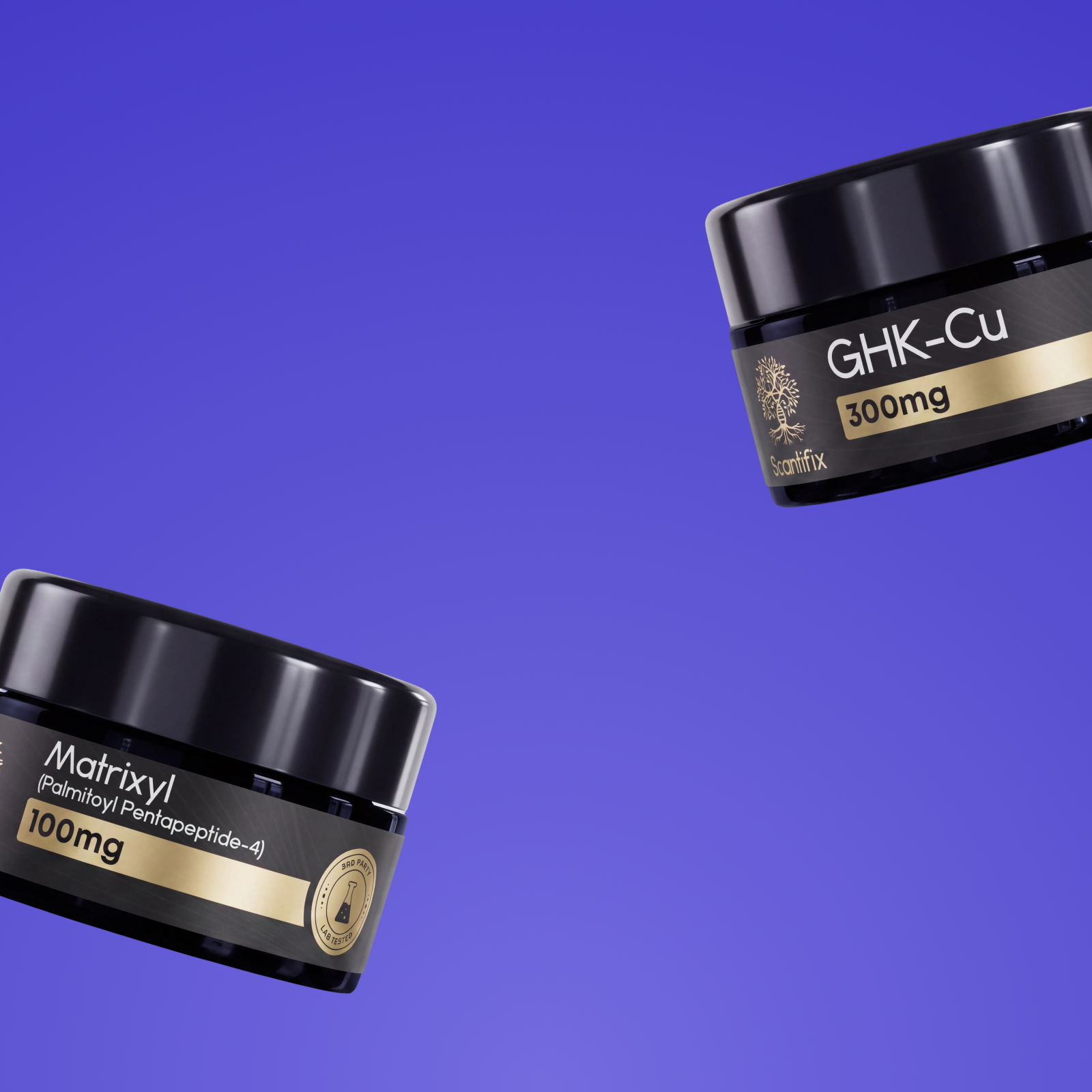


You've probably heard of copper peptides in skincare.
GHK-Cu has been studied for years for its connection to tissue remodeling, extracellular matrix support, and skin biology. But there is another copper peptide that deserves a closer look, particularly if you're interested in hair and scalp care.
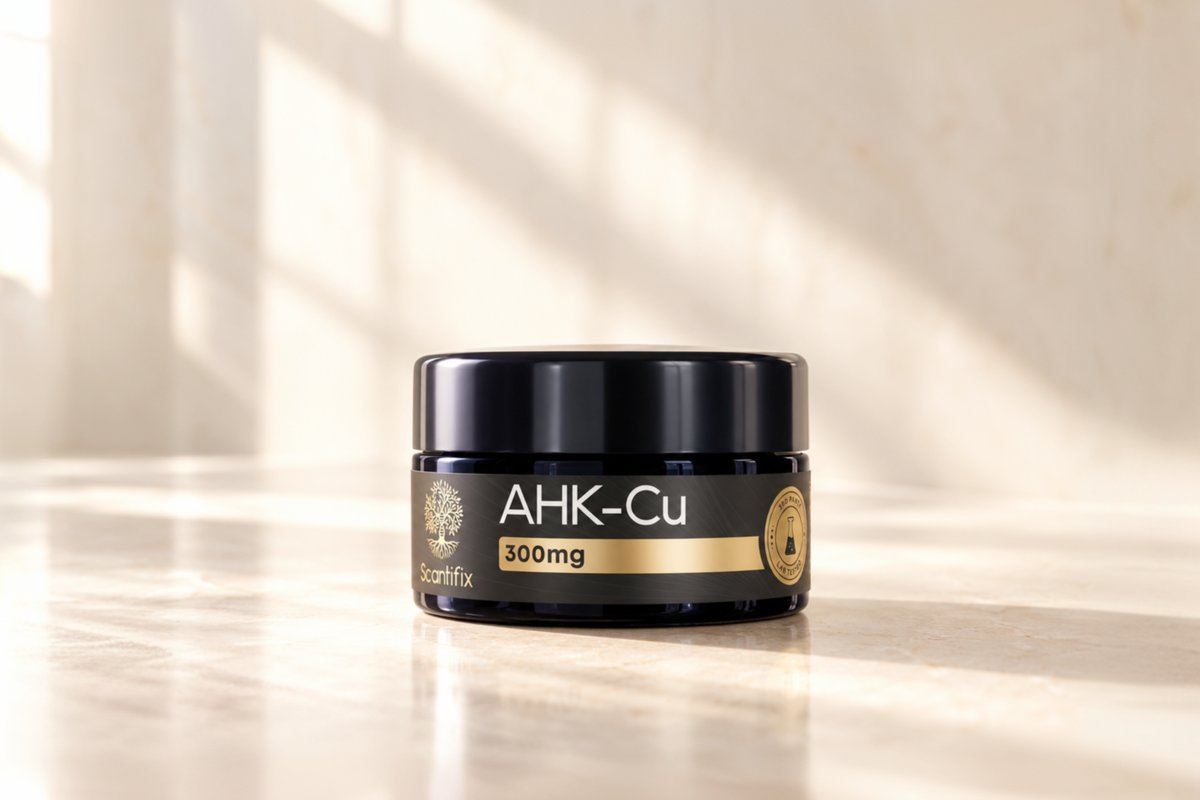
It's called AHK-Cu. So what exactly is it, and what makes it interesting for hair?
What Is AHK-Cu Peptide?
AHK-Cu, short for L-alanyl-L-histidyl-L-lysine copper, is a tripeptide complexed with copper (Pyo et al., 2007).
Its peptide portion contains three amino acids:
- Alanine (A)
- Histidine (H)
- Lysine (K)
The addition of copper gives AHK-Cu its place within the broader family of copper peptides.
Peptides are short chains of amino acids that can participate in a wide range of biological processes. Copper, meanwhile, is an essential trace element involved in numerous enzymatic reactions and cellular functions.
When copper is bound to a specific peptide sequence, researchers can investigate how that complex interacts with biological systems.
AHK-Cu is particularly interesting because some of the research surrounding it has focused not just on skin, but specifically on hair follicle biology.
What Are Copper Peptides
Copper peptides are not one single ingredient.
They are a group of peptide-copper complexes that have been investigated for their involvement in processes such as extracellular matrix organization, cellular signaling, tissue remodeling, and antioxidant activity.
The best-known example is GHK-Cu, a naturally occurring copper-binding peptide that has been extensively studied in skin and tissue research (Pickart & Margolina, 2018).
AHK-Cu has a similar three-amino-acid structure, but the sequences are different:
- GHK-Cu: Glycine-Histidine-Lysine + copper
- AHK-Cu: Alanine-Histidine-Lysine + copper
That may look like a very small difference. Biologically, however, changing even one amino acid can alter how a peptide interacts with cells and biological targets.
This is one reason researchers study individual peptide sequences rather than assuming that all peptides in the same family will behave identically.
Why Is AHK-Cu Interesting for Hair
The most interesting part of AHK-Cu research is its relationship with the dermal papilla.
The dermal papilla is a specialized group of cells located at the base of the hair follicle. It acts as an important signaling center within the follicle, communicating with surrounding cells involved in producing the hair shaft and regulating follicle activity (Morgan, 2014; Borrelli et al., 2020).
In other words, the hair follicle isn't simply a tube that produces hair.
It's a dynamic biological structure whose growth depends on communication between different types of cells.
This makes dermal papilla cells an important area of research when scientists are investigating compounds that may influence hair follicle behavior.
AHK-Cu and Dermal Papilla Cells
A 2007 study specifically investigated L-alanyl-L-histidyl-L-lysine copper (AHK-Cu) using cultured human dermal papilla cells and ex vivo human hair follicles (Pyo et al., 2007).
Researchers found that AHK-Cu stimulated the proliferation of dermal papilla cells in vitro. In the ex vivo hair follicle model, AHK-Cu also increased hair follicle elongation under the experimental conditions tested. The researchers proposed that these effects could be related to increased dermal papilla cell proliferation and reduced apoptotic signaling (Pyo et al., 2007).
That's significant because it gives AHK-Cu a more specific biological story than simply being another ingredient marketed as a "hair growth peptide."
The research was looking directly at human hair follicle tissue and human dermal papilla cells.
It wasn't a large clinical trial in people using an AHK-Cu serum. But it provides an interesting starting point for understanding why this particular copper peptide has attracted attention in hair research.
How Could AHK-Cu Support Hair Follicle Biology
The research around AHK-Cu points toward several aspects of follicle biology.
Supporting Dermal Papilla Cell Activity
Dermal papilla cells play a central role in regulating hair follicle growth (Morgan, 2014; Borrelli et al., 2020).
The 2007 study found that AHK-Cu stimulated dermal papilla cell proliferation in vitro. The researchers also observed changes in markers associated with cell survival, including an increased Bcl-2/Bax ratio and reduced levels of cleaved caspase-3 and PARP at the tested concentration (Pyo et al., 2007).
These findings help explain why AHK-Cu is interesting from a follicle-biology perspective.
Rather than simply conditioning the visible hair shaft, the research is focused on cells inside the follicle environment.
Supporting Hair Follicle Elongation
The same study examined isolated human hair follicles outside the body.
AHK-Cu stimulated follicle elongation at the concentrations tested, providing another reason researchers became interested in its potential role in hair biology (Pyo et al., 2007).
Hair follicle elongation in an ex vivo model is not the same thing as demonstrating increased hair growth in people. But it is a useful experimental model for investigating how a compound may interact with follicular tissue.
Supporting the Follicle Environment
Hair follicles depend on constant communication between dermal and epithelial cells.
The dermal papilla functions as an important signaling niche for the cells responsible for regenerating the cycling portion of the follicle and producing the hair shaft (Morgan, 2014; Duscher et al., 2020). Research into hair follicle biology has therefore placed considerable emphasis on the signals exchanged between dermal papilla cells and surrounding follicular cells.
This gives AHK-Cu an interesting place within modern hair-care research: its potential role isn't simply about the strand we can see, but about the biological environment supporting the follicle itself.
AHK-Cu vs. GHK-Cu
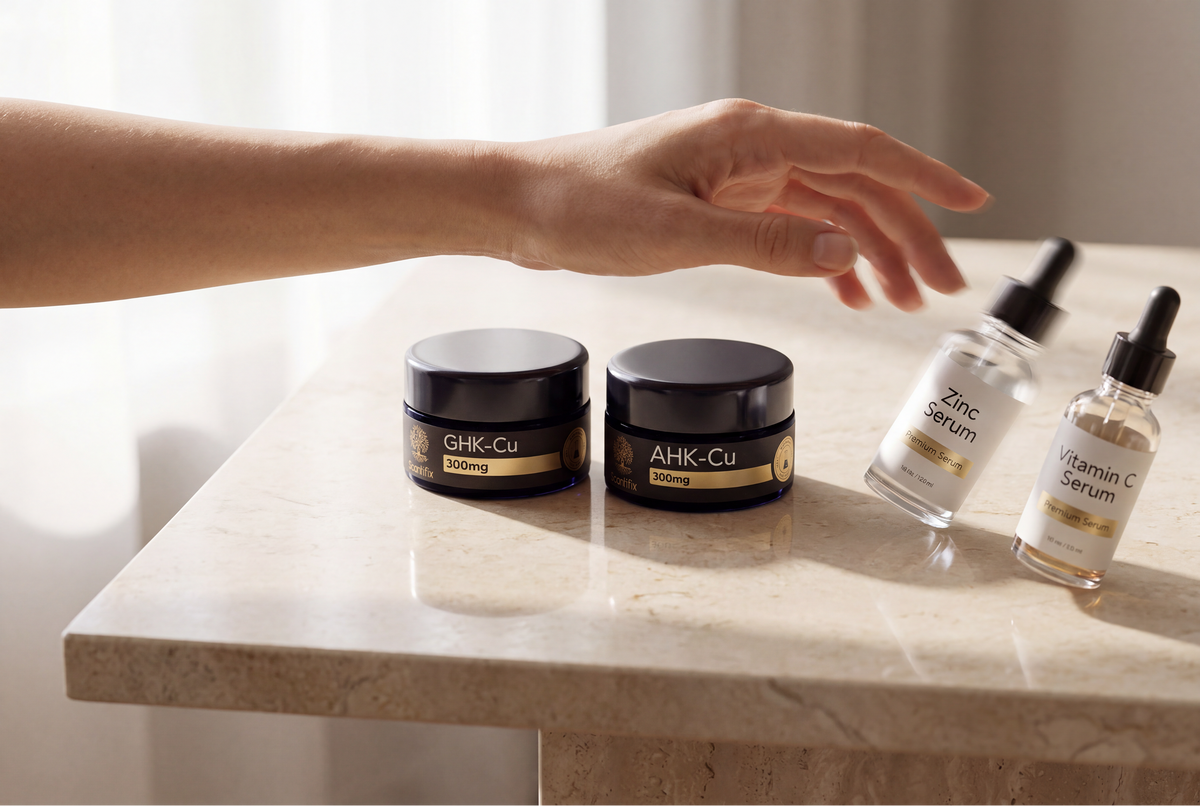
If you've encountered copper peptides before, you may be wondering how AHK-Cu compares with the better-known GHK-Cu.
Both are copper-bound tripeptides, but they have different amino acid sequences.
|
AHK-Cu |
GHK-Cu |
|
|
Peptide sequence |
Alanine-Histidine-Lysine |
Glycine-Histidine-Lysine |
|
Copper-bound |
Yes |
Yes |
|
Main research interest |
Hair follicle and dermal papilla biology |
Tissue remodeling, skin biology, extracellular matrix |
|
Cosmetic focus |
Hair and scalp applications |
Skin, hair, and tissue-focused applications |
The biggest distinction is really research focus.
GHK-Cu has a much broader research history, particularly in skin and tissue biology (Pickart & Margolina, 2018). AHK-Cu has a more specific and intriguing connection to hair follicle research, including the direct study of human dermal papilla cells and isolated human hair follicles (Pyo et al., 2007).
That doesn't make one universally better than the other.
It makes them different copper peptides with different research profiles.
Final Thoughts
AHK-Cu may not be the most familiar copper peptide, but its hair-focused research profile makes it particularly interesting.
Unlike copper peptides studied primarily in the context of skin, AHK-Cu has been investigated directly in human dermal papilla cells and ex vivo human hair follicles, where researchers observed increased dermal papilla cell proliferation and hair follicle elongation under experimental conditions.
That gives AHK-Cu a distinct place within the copper peptide family.
GHK-Cu has a broad history in skin and tissue research. AHK-Cu brings a more focused interest in hair follicle biology.
As peptide-based hair care continues to evolve, AHK-Cu is an interesting example of how small changes in peptide structure can lead researchers toward very different biological questions.
Sometimes, the next interesting ingredient isn't an entirely new molecule.
It's a different peptide sequence asking a different question.
References
Borrelli M., et al. (2020). Molecular Mechanisms of Hair Growth and Regeneration: Current Understanding and Novel Paradigms. Cells, 9(8), 2025. https://pubmed.ncbi.nlm.nih.gov/32163945/
Morgan, B. A. (2014). The dermal papilla: an instructive niche for epithelial stem and progenitor cells in development and regeneration of the hair follicle. Cold Spring Harbor Perspectives in Medicine, 4(7), a015180. https://pubmed.ncbi.nlm.nih.gov/24985131/
Pickart, L., & Margolina, A. (2018). Regenerative and Protective Actions of the GHK-Cu Peptide in the Light of the New Gene Data. International Journal of Molecular Sciences, 19(7), 1987. https://www.mdpi.com/1422-0067/19/7/1987
Pyo, H. K., et al. (2007). The effect of tripeptide-copper complex on human hair growth in vitro.
Archives of Pharmacal Research, 30(7), 834–839. https://pubmed.ncbi.nlm.nih.gov/17703734/

Leave a comment
All comments are moderated before being published.
This site is protected by hCaptcha and the hCaptcha Privacy Policy and Terms of Service apply.