



Botox has been a widely recognized treatment for smoothing wrinkles and expression lines for decades, but it's not the only option. People are starting to explore topical peptides that influence similar biological processes without injections or complete muscle immobilization.
Some peptides are designed to interact with related components of neuromuscular signaling that Botox targets, just through a different mechanism. These are called neuromodulatory peptides, and they work differently than Botox but address the same fundamental biology.
This article explains how Botox works, why people seek alternatives, and how neuromodulatory peptides can serve as a gentler option for addressing expression lines.
How does Botox work?
Botox takes its name from the botulinum toxin in its formulation, a neurotoxin that blocks muscle contraction. When your brain sends a signal to move a facial muscle, that signal travels down a nerve to the neuromuscular junction. Here, the nerve releases acetylcholine, a chemical messenger that tells the muscle to contract.
Botulinum toxin interrupts this process by interfering with acetylcholine release at the nerve. Without this chemical signal, the muscle can't receive the instruction to contract. The targeted muscle is temporarily paralyzed, and the skin above it stays smooth because the underlying movement has stopped.
The effect is temporary because the body eventually produces new nerve terminals capable of releasing acetylcholine again. This creates an ongoing cycle of blocking and restoration (Dressler et al., 2005). For some, this approach of working against natural signaling rather than with it is reason to explore alternatives.
Why people look for Botox alternatives
The reasons vary, but a few common themes appear. Some people prefer to avoid injections entirely, whether due to discomfort, cost, or simply not wanting a clinical procedure as part of their routine. The ongoing maintenance schedule can also be a factor.
Others are concerned about the frozen appearance or loss of natural expression that can come from completely blocking muscle signals. This has led to interest in approaches that modulate neuromuscular activity rather than shut it down entirely, producing more gradual, subtle change.
It's important to clarify what "alternative" realistically means here. Neuromodulatory peptides are not equivalent to Botox in strength or speed of results—they work through different mechanisms, require consistent use, and produce subtler effects. For some, that's exactly the appeal. To understand how these peptides differ from Botox, it helps to take a closer look at what neuromodulatory peptides do.
Neuromodulatory peptides: A different approach
Neuromodulatory peptides are short chains of amino acids that influence neuromuscular signaling without stopping it entirely. Unlike Botox, which strongly inhibits acetylcholine release, these peptides work at different points in the signaling pathway to reduce muscle contraction intensity rather than eliminate it.
The key difference is modulation versus paralysis. Botox blocks the signal from being sent. Neuromodulatory peptides adjust how the signal is transmitted, received, or processed. The muscle still contracts, but with less force or frequency. This allows for some natural movement while working to reduce the appearance of expression lines over time.
Another key difference is delivery. Topical neuromodulatory peptides work through the skin rather than being injected, which appeals to those looking for a gentler approach. This method requires consistent application for results to develop, but many find incorporating a topical treatment into their routine more manageable than scheduling regular clinical appointments.
Let's look at how individual neuromodulatory peptides work.
Neuromodulatory peptides with Botox-like mechanisms
Each of these peptides influences neuromuscular signaling, but they work at different points in the pathway.
Argireline
Argireline was the first neuromodulatory peptide developed for cosmetic use. It’s modeled after a protein involved in neurotransmitter release and works by interfering with the signaling process that drives muscle contraction. Rather than stopping movement entirely, it helps reduce contraction intensity over time, softening expression lines while preserving natural facial expression (Blanes-Mira et al., 2002).
SNAP-8
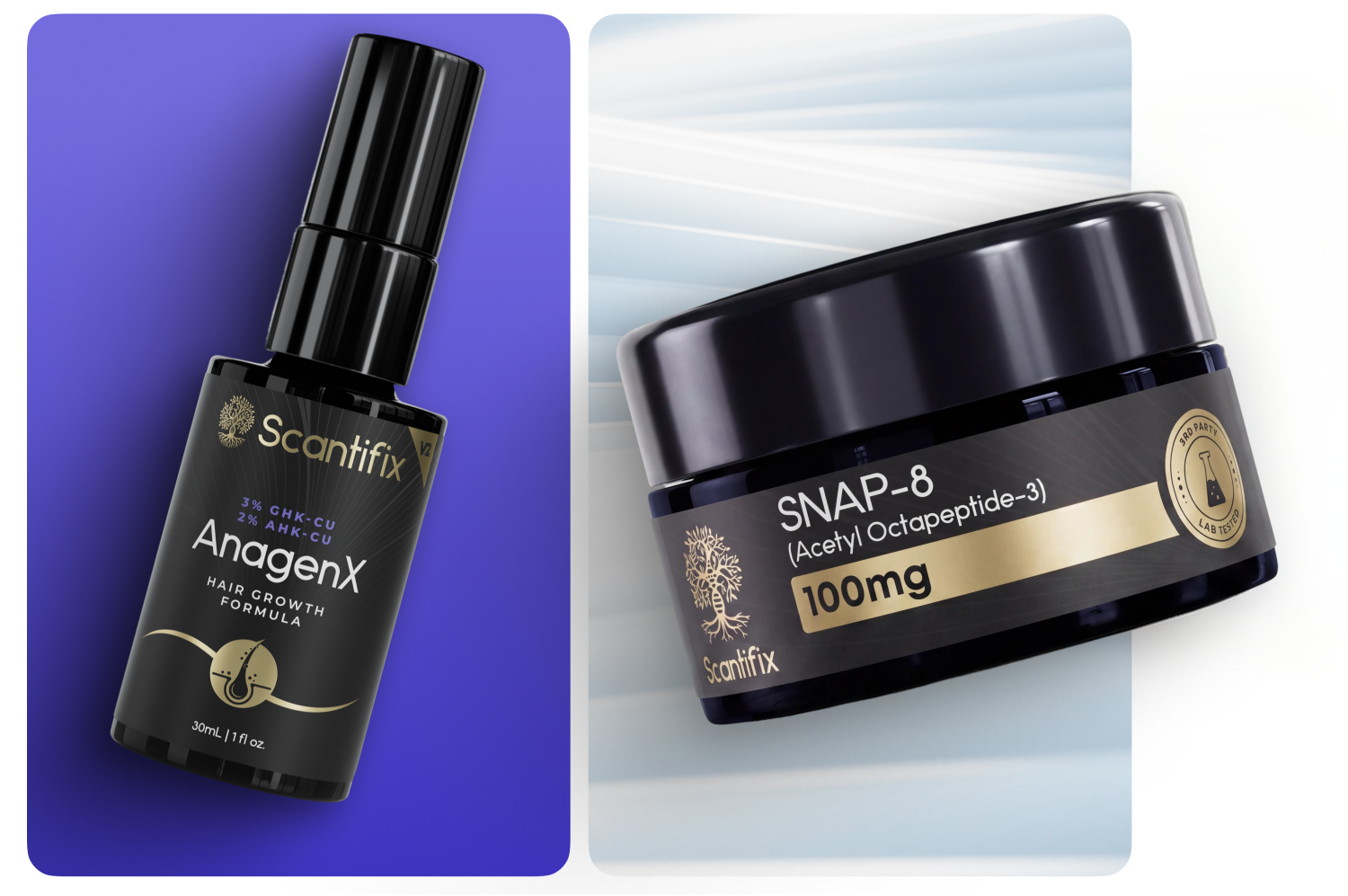
SNAP-8 is an extended version of Argireline with two additional amino acids. This structural modification enhances its ability to interfere with the same neurotransmitter release signaling involved in muscle contraction. Both peptides act at the same stage of signaling, but SNAP-8’s modified structure is designed to provide a more pronounced softening effect over time, which can be beneficial for visible, well-established expression lines (Nguyen et al., 2024; Veiga et al., 2023).
Serpen-Syl
Serpen-Syl works further downstream in the signaling pathway. Instead of influencing neurotransmitter release, it focuses on how contraction signals are received by the muscle itself. By dialing down the muscle’s responsiveness to those signals, it offers a distinct, and potentially complementary, approach from peptides that act earlier in the signaling process (Nguyen et al., 2024).
Leuphasyl
Leuphasyl uses an indirect approach. It’s modeled after enkephalins, natural signaling molecules that help regulate neurotransmitter activity upstream. Rather than acting directly on muscle contraction, it works earlier in the signaling process to gently reduce overall activity. The effect is subtler than the other peptides, making it a good option for those who want to maintain maximum facial expressiveness (Dragomirescu et al., 2014; Khalid et al., 2015).
Stacking neuromodulatory peptides
Because these peptides work at different points in the neuromuscular signaling pathway, they can be strategically combined based on individual goals. Pairing Argireline or SNAP-8 with Leuphasyl, for example, targets the signaling pathway at two different points. Adding Serpen-Syl as well targets the muscle receptors for yet another point of influence. This multi-pathway approach is the rationale behind stacking—each peptide contributes its own mechanism, potentially creating a more comprehensive effect on muscle signaling.
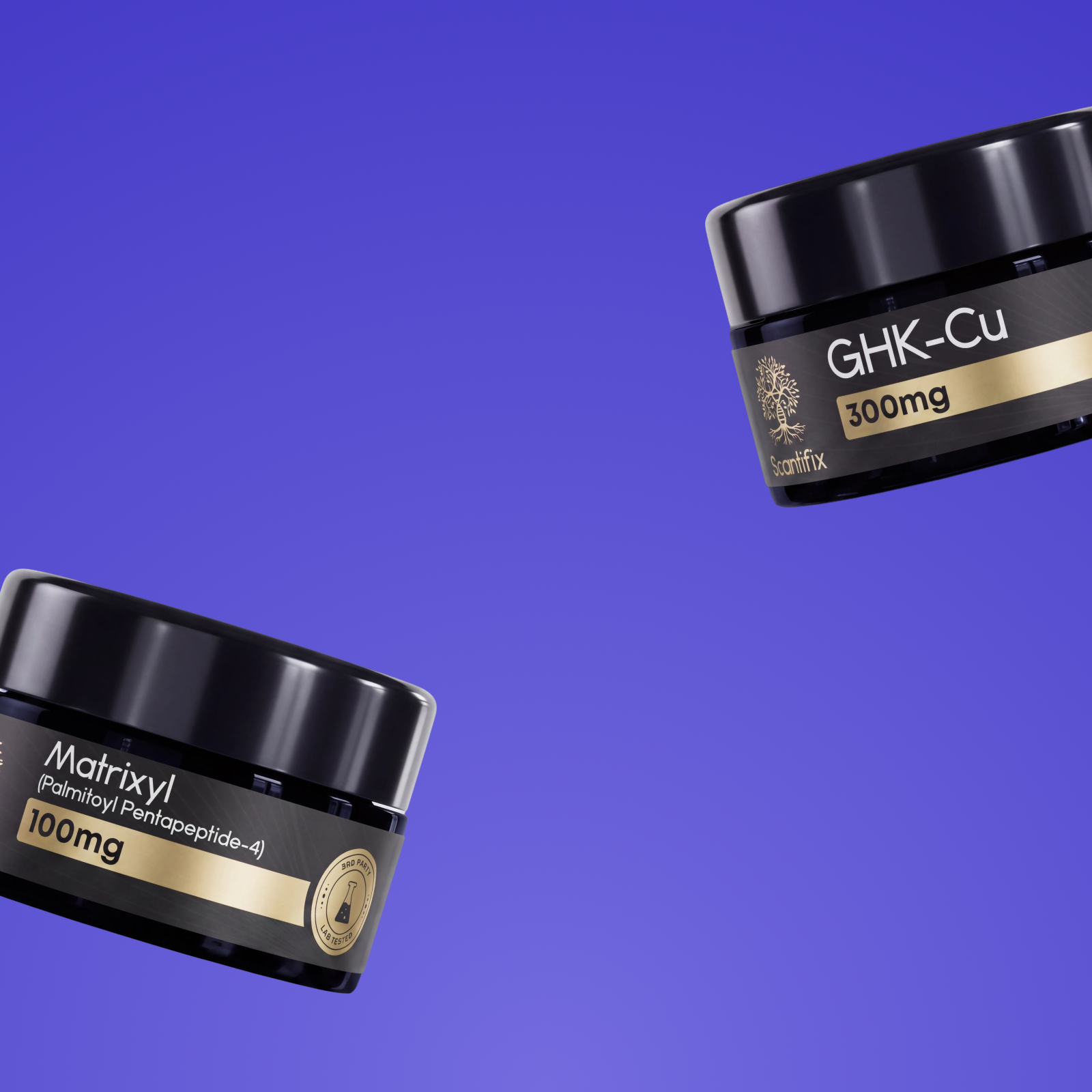
Neuromodulatory peptides can also be combined with signal peptides like GHK-Cu, Matrixyl, or Syn-Coll for those wanting to address both muscle signaling and skin structure. They're not Botox alternatives, but they offer a complementary pathway focused on collagen production and repair. Combining GHK-Cu with SNAP-8 and Serpen-Syl, for example, targets both wrinkles and skin structure.
What to look for when considering peptide-based alternatives to Botox
Quality matters regardless of which peptides you choose. Not all peptide products deliver the same results, and the difference often comes down to purity, testing, and formulation integrity.
Purity and testing: Look for peptides with purity levels around 98% or higher, verified by third-party testing. Certificates of Analysis (COAs) should be available and show exact peptide content. This ensures you're getting the active ingredient at effective concentrations.
Structural integrity: Peptides degrade when exposed to light, heat, or air. Proper packaging in violet or amber glass and appropriate storage conditions help maintain stability. Products that don't address this may lose effectiveness over time.
Transparency: Reputable suppliers disclose exact concentrations, provide detailed sourcing information, and make testing results accessible. Vague labeling or missing documentation often signals lower-quality products.
Raw peptides vs. finished formulations: Pre-made serums are convenient, but often contain preservatives, fillers, or fragrances that dilute active ingredients. They may also have degraded over time if peptides have been sitting in solution. Raw peptides give you control over formulation—you know exactly what's in your serum, can adjust concentrations, and can combine peptides tailored to your goals. Quality matters in both cases, but raw peptides ensure you're starting with the freshest, most potent form.
At Scantifix, we hold ourselves to these standards—third-party testing, transparent COAs, proper handling and storage, and consistently high-purity peptides.
The bottom line
Botox can deliver results, but it's not the only option. For those concerned about frozen facial features, injections, or the cycle of clinical appointments, neuromodulatory peptides offer a gentler Botox alternative that works topically and preserves natural expression.
If this approach appeals to you, prioritize quality. Look for high purity, third-party testing, and transparent sourcing. Shop Scantifix's collection of pure, raw, topical peptides to explore peptide-based alternatives to Botox.

Resources:
Blanes-Mira, C., Clemente, J., Jodas, G., Gil, A., Fernández-Ballester, G., Ponsati, B., Gutierrez, L., Pérez-Payá, E., & Ferrer-Montiel, A. (2002). A synthetic hexapeptide (Argireline) with antiwrinkle activity. International Journal of Cosmetic Science, 24(5), 303–310. https://doi.org/10.1046/j.1467-2494.2002.00153.x
Dragomirescu, A., Andoni, M., Ionescu, D., & Andrei, F. (2014). The efficiency and safety of Leuphasyl—A Botox-like peptide. Cosmetics, 1(2), 75–87. https://doi.org/10.3390/cosmetics1020075
Dressler, D., Saberi, F. A., & Barbosa, E. R. (2005). Botulinum toxin: mechanisms of action. Arquivos de neuro-psiquiatria, 63(1), 180–185. https://doi.org/10.1590/s0004-282x2005000100035
Khalid, F., Gorouhi, F., & Maibach, H. I. (2015). Anti-aging topical peptides and proteins. In Z. Draelos (Ed.), Cosmeceuticals and active cosmetics (3rd ed., pp. 327–344). CRC Press. https://doi.org/10.1201/b18895-17
Nguyen, T. N., Pham, H. T., Tran, T. T. D., & Le, H. T. (2024). Non-invasive peptides as the future of botox alternatives in cosmetic applications. Cosmetics, 11(4), 118. https://doi.org/10.3390/cosmetics11040118
Veiga, E., Ferreira, L., Correia, M., Pires, P. C., Hameed, H., Araújo, A. R. T. S., Cefali, L. C., Mazzola, P. G., Hamishehkar, H., Veiga, F., & Paiva-Santos, A. C. (2023). Anti-aging peptides for advanced skincare: Focus on nanodelivery systems. Journal of Drug Delivery Science and Technology, 89, 105087. https://doi.org/10.1016/j.jddst.2023.105087



Leave a comment
All comments are moderated before being published.
This site is protected by hCaptcha and the hCaptcha Privacy Policy and Terms of Service apply.